

Building good habits sounds simple, but most people struggle to maintain them. They start with excitement and motivation, but after a few days or weeks, everything falls apart.
The problem is not lack of intention, it is the lack of a proper system. Habits don’t last because people rely on motivation instead of structure. If you understand how habits actually work, you can build routines that stay with you long-term.
Understand How Habits Are Formed
Every habit follows a simple loop: trigger, action, and reward. This pattern repeats until the behavior becomes automatic.
A trigger starts the habit, the action is what you do, and the reward reinforces the behavior. When this cycle repeats consistently, the habit becomes part of your daily routine.
Understanding this process helps you design habits instead of forcing them.
Start Small to Avoid Overwhelm
One of the biggest mistakes is starting with big goals. Large changes require more effort and are harder to maintain.
Instead, begin with small habits that are easy to follow. For example, instead of exercising for an hour, start with 10 minutes.
Small habits are easier to repeat, and consistency builds momentum over time.
Focus on Consistency, Not Intensity
Many people focus on doing more instead of doing regularly. This leads to burnout and inconsistency.
It is better to do a small habit every day than to do a big habit occasionally. Consistency builds strong patterns in your mind.
Over time, these small actions lead to significant results.
Attach New Habits to Existing Routines
One of the easiest ways to build a habit is to connect it with something you already do. This reduces the effort needed to remember.
For example, you can read after brushing your teeth or stretch after waking up. This method makes habits more natural.
Linking habits creates a smooth transition in your daily routine.
Create a Supportive Environment
Your environment has a strong influence on your behavior. If your surroundings support your habits, it becomes easier to stay consistent.
Remove distractions and keep tools for your habits easily accessible. This reduces friction.
A good environment makes good habits easier and bad habits harder.
Track Your Progress
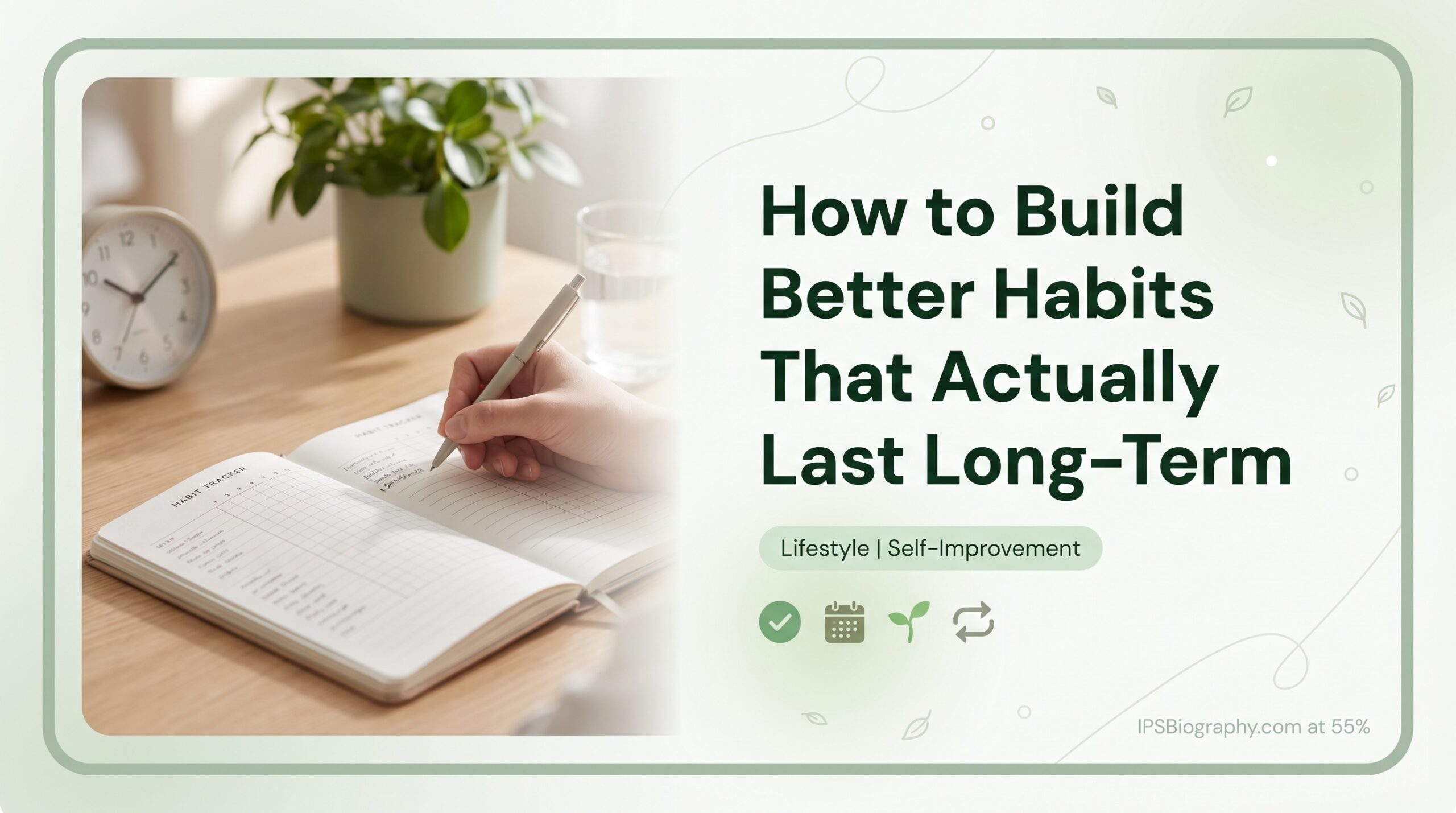
Tracking your habits helps you stay accountable and motivated. It shows your consistency over time.
You can use simple methods like marking a calendar or using an app. Seeing your progress encourages you to continue.
Tracking also helps you identify patterns and improve.
Avoid Relying Only on Motivation
Motivation is temporary and cannot be relied on for long-term habits. It comes and goes.
You need systems that work even when you don’t feel motivated. This is where discipline and structure become important.
Habits should continue even on low-energy days.
Make Habits Enjoyable
If a habit feels like a burden, it will be difficult to maintain. Enjoyment plays a key role in consistency.
Find ways to make your habits interesting or rewarding. This increases your chances of sticking with them.
Enjoyable habits are easier to sustain.
Be Patient with the Process
Habits take time to develop. Many people give up because they don’t see immediate results.
You should understand that habit building is a gradual process. Results come from repeated actions over time.
Patience helps you stay committed.
Handle Missed Days Properly
Missing a day does not mean failure, but how you respond matters. Many people quit after missing a day.
Instead, focus on getting back on track immediately. Don’t let one mistake turn into a pattern.
Consistency is built over time, not in a single day.
Avoid Too Many Habits at Once
Trying to build multiple habits at the same time can be overwhelming. It divides your focus.
Start with one or two habits and build them properly before adding more. This approach is more effective.
Focus leads to better results.
Build Identity-Based Habits
Instead of focusing only on actions, focus on identity. Think about the type of person you want to become.
For example, instead of saying “I want to exercise,” think “I am a person who stays active.” This changes your mindset.
Identity-based habits are more powerful and long-lasting.
Stay Consistent Even on Difficult Days
There will be days when you don’t feel like following your habits. These are the days that matter the most.
Even doing a small version of your habit keeps the pattern alive. This prevents breaks in consistency.
Showing up regularly is more important than doing everything perfectly.
Review and Improve Your Habits
Habit building is not a one-time process. You should review your habits regularly and make improvements.
Identify what is working and what needs change. This helps you refine your system.
Continuous improvement leads to better habits.
Final Thoughts
Building habits that last long-term is not about motivation, it is about systems and consistency. Small actions repeated daily create powerful results.
Start small, stay consistent, and focus on progress. Over time, these habits will become a natural part of your life.
If you follow the right approach, you don’t just build habits, you build a better lifestyle.