

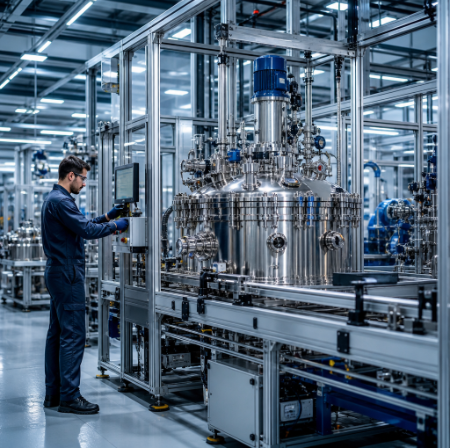
As chemical and pharmaceutical manufacturers transition toward fully automated production environments, the selection and placement of reactor equipment has become a critical design consideration. The industrial reactor sits at the heart of most process manufacturing operations, yet its integration with warehouse automation, material handling systems, and digital control infrastructure often receives inadequate attention during facility planning. This oversight can result in bottlenecks, compromised safety protocols, and missed opportunities for operational efficiency.
Modern manufacturing facilities demand reactor systems that communicate seamlessly with automated inventory management, support flexible batch scheduling, and accommodate the physical constraints of robotic material handling. Understanding how reactor configuration choices affect downstream automation is essential for facilities managers, process engineers, and manufacturing directors planning new installations or retrofits.
Space Planning for Reactor Integration in Automated Facilities
Reactor placement within an automated facility requires substantially more clearance than traditional layouts. Automated guided vehicles, overhead crane systems, and robotic material handlers need defined travel paths with consistent dimensions. A batch reactor installation must account for AGV turning radii, typically 2.5 to 3 meters, and maintain clear zones for automated pallet exchange systems.
Vertical clearance presents another constraint. While a standalone reactor might require only standard ceiling heights, integration with automated systems often demands additional overhead space for robotic arms, automated sampling systems, and sensor arrays. Facilities should plan for minimum clearances of 5 to 6 meters in reactor zones where overhead automation will operate. This vertical space requirement directly impacts building costs and should be factored into feasibility studies early in the design phase.
Foundation loading calculations must also account for the dynamic forces generated by automated handling equipment. A reactor serviced by overhead cranes or robotic charging systems experiences different vibration profiles than manually serviced units. These forces can affect mixing efficiency, vessel integrity, and instrumentation accuracy over time.
Material Flow and Warehouse Connectivity
The connection between reactor operations and warehouse systems represents a fundamental shift in how process facilities manage raw materials and finished products. Traditional batch manufacturing relied on manual staging areas and forklift transport, creating buffer zones that absorbed scheduling variations. Automated facilities eliminate these buffers, requiring tight synchronization between reactor cycles and warehouse inventory movements.
Implementing effective material flow requires reactor vessels with standardized connection points that automated dispensing systems can access reliably. Charging ports, sampling valves, and discharge connections must align with the reach envelopes and positioning accuracy of automated equipment. A reactor designed for manual operation may have access points optimized for operator convenience rather than robotic precision, creating integration challenges that are expensive to retrofit.
Modern automated warehouse systems can track raw material lot numbers, expiration dates, and quality certificates through integrated software platforms. Reactor systems must feed data back into these platforms to maintain complete batch genealogy. This bidirectional communication enables real-time inventory adjustments, automatic reordering triggers, and compliance documentation without manual data entry.
Sourcing Reactor Equipment for Automated Environments
Facilities implementing automation often face budget constraints that make new reactor purchases prohibitively expensive, particularly when multiple vessels are needed to support continuous operation schedules. The used equipment market provides access to high-quality reactor vessels at reduced capital costs, but selection requires careful evaluation of automation compatibility.
Chemical and pharmaceutical manufacturers seeking reactor equipment for automated facilities should prioritize vessels with comprehensive documentation, including original fabrication drawings, material certifications, and maintenance records. This documentation becomes essential when integrating sensors, control systems, and automated connections. International Process Plants specializes in used and surplus process equipment for chemical, pharmaceutical, and biotech operations, offering batch-type agitated reactors and reactor shells in materials including stainless steel, Hastelloy, and titanium. For corrosive process environments common in pharmaceutical synthesis, a glass lined vessel provides the necessary corrosion resistance while supporting the instrumentation requirements of automated systems. Used reactors from reputable suppliers typically include ASME certification and can be retrofit with modern control interfaces.
When evaluating used reactor equipment, automation readiness depends on several factors: nozzle configuration and spacing, jacket design compatibility with automated thermal control systems, internal surface finish quality for cleaning validation, and structural provisions for load cell integration. Vessels originally designed for manual operation can often be upgraded, but the cost of modifications should be incorporated into the total acquisition budget.
Control System Architecture and Data Integration
Reactor control systems in automated facilities must extend beyond basic temperature and pressure monitoring to provide the granular data that warehouse management systems, enterprise resource planning platforms, and quality management systems require. Each batch cycle generates data points that feed scheduling algorithms, inventory calculations, and predictive maintenance models.
Modern distributed control systems allow reactor parameters to be monitored and adjusted through the same interface that manages warehouse automation, creating a unified operational view. However, integrating legacy reactor instrumentation with contemporary automation platforms often requires protocol translation, signal conditioning, and custom middleware development. Facilities should budget for integration costs that can reach 20 to 30 percent of the reactor equipment value.
Data historians play a crucial role in linking reactor operations to automated warehouse functions. By capturing time-series data from reactor sensors, these systems enable correlation analysis between process conditions and downstream handling requirements. For example, a batch with extended reaction time might trigger automated adjustments to warehouse picking schedules, preventing bottlenecks before they occur.
Safety Considerations in Automated Reactor Operations
Automation introduces new safety scenarios that reactor systems must accommodate. Robotic material handling removes human operators from hazardous zones during normal operation, but creates potential failure modes during equipment malfunctions. Reactor installations in automated facilities require redundant safety interlocks that prevent automated equipment from accessing vessels during unsafe conditions such as elevated pressure, high temperature, or active mixing.
Emergency response procedures become more complex when automated systems control material flow to reactors. Manual override capabilities must allow operators to isolate reactors and halt automated charging sequences without requiring access to multiple control stations. Safety instrumented systems should be designed with automation failures as a defined hazard scenario, with appropriate risk reduction measures.
Validation of automated reactor systems for pharmaceutical applications presents additional challenges. Process analytical technology sensors, automated sampling systems, and digital control loops all require qualification protocols that demonstrate consistent performance. The validation workload for an automated reactor system can exceed that of equivalent manual systems by a factor of two or more, requiring dedicated resources and extended timelines.
Future Trends in Reactor Automation
Research institutions continue developing advanced catalysis and process control methods that will further integrate reactor operations with facility automation. Universities and research centers, such as those conducting catalysis and energy research, are exploring machine learning algorithms that optimize reactor conditions based on real-time feedback from automated analytical systems. These developments will eventually enable self-adjusting processes that respond autonomously to raw material variations and product quality measurements.
Digital twin technology promises to revolutionize how facilities plan reactor integration with warehouse automation. By creating virtual models that simulate material flow, reaction kinetics, and equipment interactions, engineers can identify integration issues before physical installation begins. These models can also support ongoing optimization, testing proposed changes in the digital environment before implementing them in production.
The convergence of reactor technology and warehouse automation represents a fundamental evolution in process manufacturing. Facilities that carefully plan reactor selection, placement, and integration with automated systems position themselves to achieve the efficiency gains and operational flexibility that modern markets demand. Success requires cross-functional collaboration between process engineers, automation specialists, and facilities planners from the earliest stages of project development.