
A chandelier can look perfect in a product photo and strangely wrong once it is hanging at home. The usual explanation is that the fixture was too large, too small, or installed at the wrong height. Sometimes that is true. Just as often, the real problem is simpler: nobody considered how the light would look from the next room.
I learned this while helping a friend rearrange her dining room. The chandelier looked balanced when we stood beside the table. From the hallway, however, it appeared to be drifting toward the window. The electrical box was centered in the room, but the dining table was not. Once you noticed the mismatch, it was impossible to ignore.
That experience changed how I judge ceiling lights. Measurements still matter, but I now begin by walking through the house and studying the room from several ordinary positions.
Find the Real Center of the Room
The architectural center is not always the visual center. A dining room may have a centered ceiling box, yet the table might sit closer to one wall so there is enough space for a cabinet. In a living room, the furniture may face a fireplace rather than follow the room’s exact dimensions.
Before shopping for chandeliers, decide what the fixture should belong to. Is it meant to anchor the dining table, mark a conversation area, fill an open stairwell, or simply brighten the middle of the room? Once that question is answered, placement becomes much easier.
A chandelier usually looks more intentional when it follows the furniture below it.
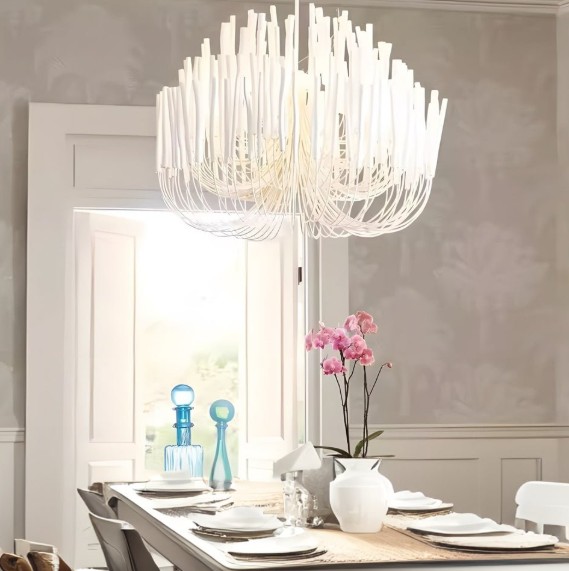
For a dining area, I would center the chandelier over the table rather than over the entire room. This remains true even if the table is slightly off-center. The relationship between those two objects is what people notice first. If the table is likely to move regularly, a swag hook or an adjustable suspension system may offer more flexibility than a fixed drop.
Check the View from the Doorway
Stand at the main entrance to the room. Then step back into the hallway. If the space connects to a kitchen or living area, look from there as well. These are the views you will see while carrying groceries, greeting guests, or walking through the house—not the carefully framed angle used for a photograph.
Pay attention to what appears behind the chandelier. A busy fixture can feel even busier when it overlaps open shelving, patterned curtains, or framed artwork. A simpler shape may work better in that situation. On the other hand, a sculptural chandelier can give a plain room the detail it is missing.
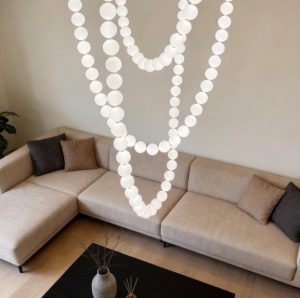
Curved fixtures can soften rooms dominated by straight furniture and rectangular walls.
Take a phone photo from each doorway. Photographs flatten a room and make awkward alignment surprisingly obvious. You may spot that the chandelier competes with a pendant in the kitchen, blocks part of a mirror, or looks crowded against a tall cabinet. It is easier to reconsider a fixture before the electrician arrives.
Judge Size with Cardboard, Not Guesswork
Dimensions on a screen are difficult to imagine. A 32-inch chandelier might sound large, yet seem modest above a long dining table. Conversely, a fixture with wide arms can dominate a small room even when its central body is narrow.
Cut a piece of cardboard to match the fixture’s diameter, or mark the width on the floor with painter’s tape. Ask someone to hold the cardboard near the expected hanging position while you view it from across the room. It is not glamorous, but it reveals more than repeatedly checking the product measurements.
Height deserves the same attention. Above a dining table, the bottom of the fixture should generally sit around 30 to 36 inches above the tabletop, although a tall ceiling may allow a slightly higher position. In an open walkway, leave enough clearance for the tallest person in the household—and for anyone carrying a box, plant, or folded ladder.
Crystal Needs Space Around It
Crystal lighting behaves differently from an opaque metal fixture. During the day, the pieces reflect windows, furniture, and passing movement. At night, they scatter small highlights across nearby surfaces. That extra visual activity is part of the appeal, but it can become overwhelming in a room already filled with glossy finishes.
When comparing crystal chandeliers, look beyond the number of tiers or drops. Consider the shape of the frame, the density of the crystals, and whether the bulbs are exposed. A compact design with clean spacing can feel contemporary, while closely arranged droplets tend to create a more formal impression.
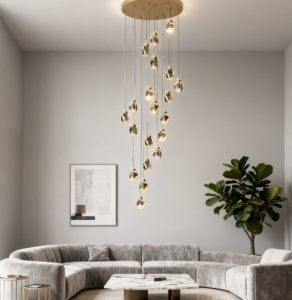
Tall spaces can support longer fixtures because the design has room to unfold vertically.
Also think about cleaning. A chandelier above a dining table is usually reachable with a small step ladder. One suspended through a two-story stairwell may require specialist equipment. If every crystal must be removed and cleaned individually, that beautiful fixture could become a job you postpone for years.
Test the Light You Will Actually Use
A chandelier does not have to provide every bit of light in the room. In fact, it often looks better when paired with wall lights, lamps, or recessed lighting. The chandelier can create atmosphere while other sources handle reading, cooking, or detailed work.
Check the bulb type and maximum wattage before buying. For dining and living spaces, warm light usually feels more comfortable in the evening. A dimmer is worth adding, especially when the same room is used for weekday breakfasts, homework, and late dinners. Just confirm that the bulbs, fixture, and dimmer are compatible.
Finally, switch off every other light and imagine the chandelier on by itself. Will it throw light onto faces, or mainly illuminate the ceiling? Could exposed bulbs create glare when someone is seated? Frosted shades and diffusers may look less dramatic in close-up, but they are often easier to live with.
Make the Decision from Real Life
The most useful chandelier test takes only ten minutes. Mark its width, estimate its lowest point, and walk through the connected rooms. Sit at the table. Stand in the hallway. Look toward it from the sofa. If the fixture still feels balanced from all those positions, you are probably making a sound choice.
A chandelier should not require the room to pose for it. The right one looks convincing while people are eating, moving chairs, opening cabinets, and passing through with laundry. That is the view worth designing for.