
Tornado outages can last from several hours to multiple days, so the right home battery backup starts with a realistic view of what you need to keep running. Some households only want refrigeration, lights, phone charging, and internet. Others also need well pumps, sump pumps, medical equipment, or selected heating and cooling loads. Battery requirements rise quickly as power demand and outage length increase. To estimate the right size, define your backup priorities, total the watts you may run at once, and calculate how many kilowatt-hours you need for one night or a longer disruption.
Choose How Much of Your Home You Want to Back Up
Essential Backup for Refrigeration, Lights, and Communication
Essential backup usually covers the loads that protect food, safety, and communication during a tornado outage. For many homes, that means a refrigerator, a few LED lights, phone charging, a Wi-Fi router, and possibly a television or radio for alerts. This level of backup often keeps simultaneous demand relatively modest, but startup surges still matter, especially for refrigeration equipment. A practical estimate may fall in the low kilowatt range for power output, with daily energy use often landing around a few kilowatt-hours to roughly 8 kWh depending on habits. If your goal is basic livability overnight and through the next day, essential backup is usually the most efficient starting point.
Broader Coverage for Pumps and Selected Heating or Cooling Loads
Broader backup covers the devices that protect your home and maintain basic comfort, not just convenience. After a tornado, that often includes a sump pump, well pump, garage door opener, microwave, additional outlets, and selected heating or cooling loads such as a furnace blower or a small window AC. These appliances can raise both surge demand and total energy use substantially. A pump cycling on unexpectedly can also overlap with refrigerator or HVAC startup. In this category, many households move from a small essential backup plan to a more robust system sized for several kilowatts of output and significantly more stored energy to handle a longer interruption without constant load management.
Turn Your Backup Priorities Into a Battery Size
Calculate Simultaneous Power Demand and Daily Energy Use
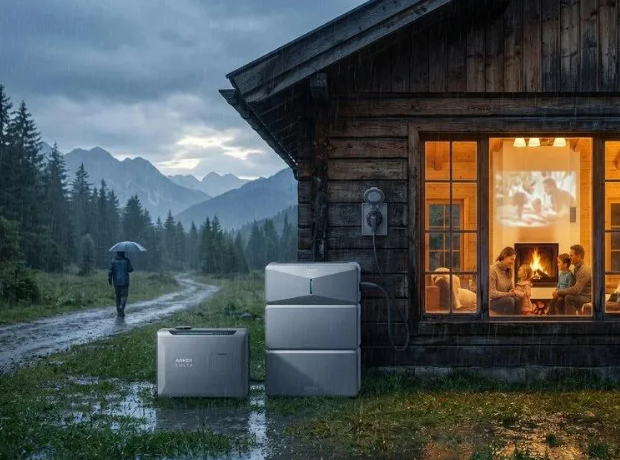
Battery sizing starts with two numbers: peak watts and daily kilowatt-hours. Peak watts tell you how much power the battery must deliver at one time when appliances start or overlap. Daily kilowatt-hours show how long the battery can support those loads. Add the running watts of every device you expect to use together, then account for short startup surges from refrigerators, pumps, and HVAC equipment. Next, multiply each device’s wattage by the hours you expect to run it. For households aiming at larger tornado backup coverage, the Anker SOLIX E10 Whole-Home Backup supports 10-30kW Turbo Output, making it relevant for heavier combined loads rather than only a few essential circuits.

Size Usable Storage for an Overnight or Multi-Day Interruption
Once you know daily energy use, size storage around the outage window you want to cover. If your essentials use 5 kWh per day, an overnight event may call for roughly that amount of usable capacity, while a two-day interruption may need closer to 10 kWh before adding a safety margin. Broader backup with pumps or cooling can push that much higher. It helps to size for real usable storage, not just a headline number, because reserve power provides flexibility when restoration is delayed. For larger planning ranges, battery systems such as the Anker SOLIX E10 offer 6-90 kWh battery expandability, which can fit either overnight essentials or more extended whole-home backup goals.
What Could Change Your Battery Requirements After a Tornado?
Longer Restoration Times and Changing Household Demand
If you’re asking “does georgia have tornadoes,” consider how downed lines, blocked roads, and infrastructure damage can delay repairs after a tornado. Delays affect battery planning. A system sized for one evening may feel comfortable at first, then become tight if power is still out the following afternoon. Household demand also shifts after a tornado. You may run more lights, charge more devices, open the refrigerator more often, or operate fans for comfort and ventilation. If cleanup begins quickly, power tools or garage access may become priorities too. Planning some extra battery capacity above your basic estimate helps absorb those changes without forcing strict rationing when conditions are already stressful.
Available Recharging and Future Battery Expansion
Recharging access can reduce how much battery you need on day one. If solar is available after the storm, daytime production can refill part of the battery and extend backup duration. A generator can play the same role when cloud cover or debris limits solar performance. The Anker SOLIX E10 Whole-Home Backup supports 9-27kW Solar Input and a 4.5kW Smart Generator, which can help sustain longer outages instead of relying only on stored energy. Future expansion matters as well. If you may later add more circuits, an electric appliance, or stronger storm preparedness goals, choosing a system that scales upward can be more practical than replacing an undersized setup after one demanding tornado season.
Conclusion
Most tornado outages require enough home battery backup to match your real priorities, not an arbitrary number. Essential loads may only need a modest system for refrigeration, lights, and communication, while pumps and selected heating or cooling can push you into a much larger range. Start with simultaneous watts, then calculate daily kilowatt-hours and multiply by the outage duration you want to cover. Recharging options and expandability can reduce risk during longer disruptions. If seamless operation also matters, systems designed for storm resilience may offer features such as ≤20 ms seamless switchover to keep critical loads running smoothly.