
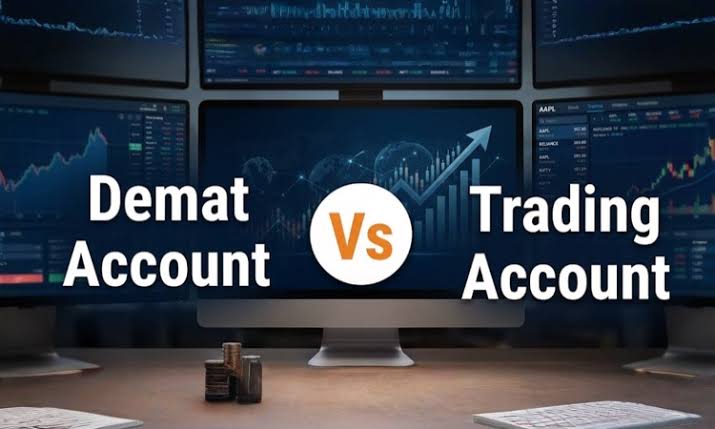
Many new investors in India get confused about Demat and Trading accounts. If you plan to invest seriously, choosing the best demat account in India matters just as much as understanding how it differs from a Trading account.
Let’s walk through both accounts step by step so you’ll know exactly what to do next.
What Is a Demat Account?
A Demat account holds your shares and securities in digital form. It replaces shared certificates with electronic records. A Demat account stores equities, bonds, ETFs, and If held in demat mode, it stores mutual fund units. It keeps your securities safe and makes transferring them easier.
For example, when you buy shares of Reliance they go into your Demat account. If you’re comparing providers, choosing the best demat account in India ensures lower charges and easier management of those holdings. The Demat account keeps those shares until you sell or transfer them, making it simple to track and move your holdings.
The Demat account is useful for people who buy and sell shares of companies, like Reliance.
What Is a Trading Account?
A Trading account is what you use to buy and sell stocks. It connects your bank account and Demat account. The Trading account executes buy and sell orders. It helps with fund transfers and trade settlements. For example you log in to your Trading account to buy Reliance shares. The order is executed. The shares then go to your Demat account. The Trading account makes it easy to manage your trades and investments. You use your Trading account to place orders and track your securities. It is a tool for buying and selling securities on stock exchanges.
Demat Account vs Trading Account: Key Differences
| Demat Account | Trading Account |
| Its purpose is to store securities in the electronic form. | Its purpose is to execute buy/sell orders in the market |
| Its function is to safe custody and transfer of shares | Its function is to order placement and trade execution |
| Its usage is holding investments long term or short term. | Its usage is active buying and selling of securities |
| It stores shares. | It doesn’t store shares. |
| It doesn’t execute trade. | It executes trade. |
| It is required for owning securities | It is required buying and selling securities on exchanges |
| It typical charges through AMC, Custodian fees, transaction charges | It typical charges through Brokerage, STT, exchange charges, GST |
| Example: Holding 100 shares of TCS in electronic form | Example: Buying 100 shares of TCS via app/website |
After buying via the Trading account, shares are settled into your Demat account within T+1 days. Settlement timelines may vary for F&O and other instruments. The Demat account acts as a warehouse; the Trading account acts as the transaction counter.
How Do Demat and Trading Accounts Work Together?
A typical investment flow looks like this:
- You deposit funds into your linked bank account.
- You place a buy order through your Trading account.
- The order is executed on the stock exchange.
- Cash is debited from your bank; shares are credited to your Demat account.
- When you sell, shares are debited from Demat, and cash is credited back.
This process is fully electronic and happens within one working day for most equities.
Do you need both accounts?
Yes, you need a Demat and trading account to invest and trade. You may only need a Demat account if you are holding IPO allotments or mutual fund units in demat form and do not actively trade. If you buy equities or ETFs at any point, you will need a Trading Account as well. Some people use a Demat account to hold mutual fund units or IPO allotments. They do not trade often.
You will need both accounts if you buy and sell equities often. This includes delivery and intraday trading. You also need both accounts if you participate in Futures and Options (F&O). If you apply for IPOs and you want to sell shares after they are listed you need both accounts.
Benefits of a Demat Account
- electronic storage of shares
- Reduced paperwork, no lost certificates
- Easy portfolio tracking
- Faster settlements, smoother transfers
- Holding shares in your Demat account makes you eligible for dividends, which are credited directly to your linked bank account.
When choosing the best demat account in India, consider trading frequency, portfolio size and comfort with platforms for convenience and low costs and remember you’ll need to open demat account with a reliable provider before you start trading. A demat account offers benefits that make it essential for investors to have one for their share and security holdings.
Benefits of Having a Trading Account
- Get access to equity, F&O, currency and commodity segments.
- Place orders easily via apps or web platforms.
- Trades execute in time during market hours.
- Use integrated tools for charts and analysis with alerts.
- Link your trading, bank and Demat accounts for a smooth experience, with your trading account and make the most of trading account benefits.
How to Pick the Best Platform
You should think about these things:
- Brokerage fees: rate or percentage-based.
- Platform features: Types of orders, margin options and analysis tools.
- Research tools: Reports, screeners and advice.
- Choose a platform with security like two-factor authentication and encryption.
- Good customer support and easy account opening are also key.
When you’re ready, you can easily open a Demat account online with a registered broker.
Compare fees and features before choosing a platform, like Pocketful.
Demat Account vs Trading Account: Which One Should You Choose?
- Investors: Primarily need a Demat account; a Trading account is necessary if they buy/sell frequently.
- Traders: Must have both accounts for active market participation.
- Beginners: Ideally start with both accounts to learn by doing.
- Long-term wealth creators: Focus on a quality Demat account and use Trading only when rebalancing or adding positions.