
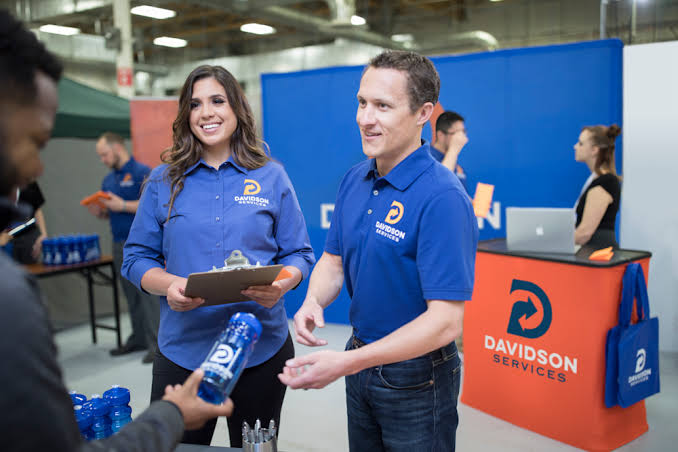
Walking a trade show floor, it takes about three seconds to spot which booth staff belong to a company and which attendees are just passing through. That instant recognition is not an accident. Coordinated company apparel gives employees a shared visual identity at exactly the moments when visibility, first impressions, and professional credibility matter most.
Matching Apparel to the Type of Business Event
Not every event calls for the same garment. The formality of the venue, the physical demands of the day, and what employees are actually doing all shape the right choice.
Conferences and Professional Summits
At multi-day conferences, staff are often seated in sessions, presenting from a stage, or meeting one-on-one in hallways. A branded polo or button-collar shirt in the company’s primary color strikes the right balance: polished enough for a boardroom conversation, relaxed enough to wear for eight hours straight.
Industry Expos and Trade Shows
Expo environments are high-traffic and physically demanding. Staff spend hours on their feet, answering questions, demonstrating products, and moving materials. Performance-blend fabrics that wick moisture and resist wrinkles hold up far better than traditional dress shirts across a full show day.
Networking Receptions and Evening Events
Evening receptions call for a step-up in finish. A fitted quarter-zip pullover or a refined fleece layer over a branded shirt keeps the look cohesive without feeling like a uniform. The goal is approachable professionalism, not workwear.
Outdoor Events and Product Demonstrations
Outdoor settings introduce variables that indoor venues do not: sun, wind, and temperature swings. Layering becomes essential. A branded base layer paired with a logoed softshell jacket gives staff flexibility throughout the day without sacrificing the coordinated look.
Helping Attendees Recognize Your Team
In a crowded convention hall, the ability to find a company’s staff quickly is a genuine competitive advantage. Staff wearing branded uniforms make it easier for attendees to get help, with 67% of respondents in a VistaPrint survey saying branded clothing improved their ability to identify employees.
That recognition comes from consistency across a few key elements:
- Color discipline: Anchor the palette to one or two brand colors. Mixed tones across the team dilute the visual signal.
- Logo placement: A left-chest embroidered logo is the industry standard for good reason. It reads clearly at conversational distance without dominating the garment.
- Coordinated silhouettes: All staff wearing the same garment style, even if colors vary slightly by role, creates a unified presentation.
- Role differentiation: Some teams use a secondary color or a different garment style to distinguish managers, booth leads, or demo specialists from general staff. This small detail helps attendees navigate quickly.
Consistency is everything here. A team where half the staff wear the branded polo and the other half default to personal clothing sends a fragmented message at exactly the moment when cohesion matters most.
Prioritizing Comfort During Long Event Days
A garment that looks sharp at 9 a.m. but feels miserable by noon is a problem. Event days are long, and discomfort compounds over time in ways that affect energy, focus, and how staff engage with prospects. People notice.
Fabric Choice
Breathable, moisture-wicking blends outperform pure cotton in high-traffic environments. Cotton absorbs sweat and holds it; performance fabrics move it away from the body. For most business events, a cotton-poly blend threads the needle between a professional appearance and functional comfort.
Fit and Sizing
Apparel that fits well communicates care. Ill-fitting garments, whether too large or too tight, undermine the professional impression a company is trying to create. Offering a range of fits, including styles cut for different body types, ensures every team member looks intentional rather than outfitted as an afterthought.
Layering for Variable Conditions
Convention centers are notoriously unpredictable in temperature. A branded midlayer that staff can add or remove keeps everyone comfortable without breaking the visual consistency of the team.
Ease of Care
Multi-day events mean garments need to survive a wash cycle and come out ready to wear again. Wrinkle-resistant fabrics and colorfast dyes preserve the look across consecutive days without requiring professional pressing.
Coordinating Apparel With Other Promotional Materials
Company apparel does not exist in isolation at an event. It sits alongside booth graphics, signage, business cards, brochures, and giveaway items. The strongest presentations treat all of those elements as parts of a single visual system.
The most obvious connection is color. When the hex values on the backdrop banner match the embroidery thread on the staff shirts, the booth feels intentional. When they clash, even subtly, it creates a low-grade visual friction that attendees register without quite knowing why.
The same logic applies to giveaway items. A branded tote or cap that shares the company’s color palette reinforces the identity being built in real time. For teams that want a polished, cohesive look across staff and giveaways, branded apparel for business events tends to anchor the whole presentation, because the clothing is the one element that moves through the venue all day long.
Brochures and business cards are easy to set down or lose. But the shirt a team member is wearing stays visible through every conversation, every handshake, and every walk across the floor.
Planning Sizes, Quantities, and Delivery in Advance
Logistics are where event apparel plans most often break down. The creative decisions are the easy part. Getting the right garments to the right people on time requires deliberate planning.
With 81% of trade show attendees holding buying authority and 92% visiting primarily to explore new products, the stakes of a polished, well-prepared booth are real. Showing up without enough shirts, or with shirts that do not fit half the team, is a preventable problem.
A reliable process looks like this:
- Confirm attendance early. Lock down the final headcount at least four to six weeks before the event.
- Collect sizes deliberately. Send a size form rather than guessing. Include extended sizes and ask about fit preferences.
- Order extras. A buffer of two to three additional garments per size tier covers last-minute additions to the team and replacements for damaged items.
- Approve proofs carefully. Review a digital or physical proof of the logo placement, color, and garment color before the full run is produced. Errors caught at the proof stage cost nothing to fix.
- Account for production lead times. Decorated apparel typically requires one to three weeks in production, plus shipping time. Building in margin for delays avoids the scramble of expedited shipping fees.
The Takeaway
Effective event apparel is not just about looking uniform. It is about giving a team the tools to show up consistently, comfortably, and recognizably across every interaction of a long event day. When the clothing, the booth, and the collateral all speak the same visual language, the company’s presence at any conference or expo feels considered rather than assembled at the last minute. That kind of preparation translates directly into better conversations and stronger first impressions.