
Ask someone what a 1-in-1,000 chance feels like, and most will shrug: “small.” Ask them to count it out loud or compare it to something they have actually seen, and the answer stalls after a few seconds. Human minds track packs, herds and small groups – not odds with three zeros behind them. A forecaster can say there is a 0.1% chance of a specific flight delay pattern, and the number lands the same in most heads as 2% or 8%: just “unlikely, don’t worry about it.”
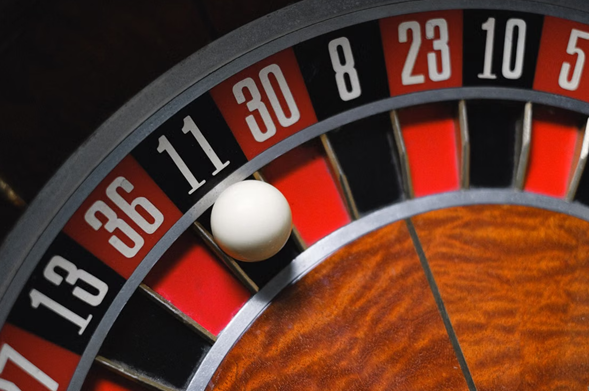
That gap between the number and the feeling shows up everywhere people weigh risk against a payoff. A trader glossing over a rare market crash, a driver ignoring a low-probability mechanical fault, a player watching a rare multiplier hit on a live table – all of them are running on the same rough mental shortcut. On Parimatch, the xxxtreme lightning roulette game illustrates the point cleanly: certain numbers get struck by a lightning multiplier only a handful of times per hundred spins, yet the visual jolt of a single strike makes the event feel far more frequent than the underlying frequency actually is.
Psychologists call the pattern probability neglect – past a certain point of rarity, the brain stops scaling its response to the actual odds and reacts instead to whether an outcome is possible at all. A 1% risk and a 0.01% risk trigger almost identical caution, even though one is a hundred times more likely. This is why lottery tickets sell briskly at odds worse than 1 in 10 million, while a genuinely useful 1-in-50 improvement, like wearing a seatbelt, gets dismissed as unnecessary caution by plenty of drivers every day, despite the seatbelt injury data published by US road-safety regulators.
Why the Brain Rounds Small Numbers Down to Zero
Numeracy researchers trace part of the problem to how numbers are taught versus how they are lived. Classrooms present probability as a fraction on a page; daily life presents it as a single yes-or-no event. Nobody experiences “0.3 of a car accident” – they experience a crash or a clean drive home, and that binary framing erases the fraction almost immediately.
Framing changes the reaction sharply, even when the odds are identical. Telling a patient a treatment carries a “1 in 1,000 chance of a serious side effect” produces noticeably more anxiety than saying it is “99.9% safe,” according to decision-science studies. The math has not moved by a decimal point, yet the emotional weight of the sentence swings considerably, because one version puts the rare outcome in the foreground and the other buries it.
Scale makes things worse. A stadium of 40,000 people picturing a 1-in-1,000 event can point to roughly forty people in the crowd, but shrink that audience to a classroom of thirty and the image collapses into nothing – less than one person, an outcome the brain cannot render. That is the size at which most everyday decisions get made: one flight, one contract, one spin, one diagnosis.
Comparing Rare Events on the Same Scale
| Event | Approximate odds | Everyday comparison |
| Being dealt a royal flush in poker | 1 in 649,740 | Rarer than winning most local raffles |
| A specific rare multiplier landing on a themed roulette number | roughly 1 in 37-74, depending on the format | Close to rolling a specific number twice in a row on a die |
| Fatal lightning strike in a lifetime (US data) | about 1 in 1,222,000 | Far rarer than a plane delay |
| Winning a mid-tier national lottery jackpot | 1 in 8,000,000+ | Less likely than being struck by lightning |
Lining these figures up side by side does more for comprehension than any single percentage ever could, because the brain is comparing shapes rather than digesting abstract fractions.
Turning a Fraction Into Something Countable
The fix researchers recommend is deceptively simple: convert every probability into a concrete, countable group before deciding how to feel about it. Instead of “0.1%,” picture one specific person out of a stadium section of a thousand, one bad batch out of a thousand identical ones rolling off a production line, one losing outcome out of a thousand honestly repeated attempts. The number stops floating and becomes something a hand could point to.
Why Round Numbers Feel Safer Than They Are
There is a mirror-image trap, too: a probability tidied into “roughly half” feels far more manageable than the messy 43% it actually represents, even though the two numbers barely differ. Rounding removes the discomfort of precision, which is exactly why marketing, weather apps and even casual conversation lean on round numbers so heavily. Precision is uncomfortable; round numbers are calming, and that calm is not the same thing as accuracy.
None of this means people are simply bad at maths. It means the numbers that matter most – the rare, high-consequence ones – are precisely the ones the human brain is worst equipped to translate into a felt sense of risk, so writing them down and comparing them, rather than trusting the gut reaction, remains the only reliable fix.