
Solar portable generators can be reliable for home backup when their output, battery size, and recharging speed match the loads you need to keep running. They are especially useful for short outages, overnight essentials, and situations where quiet, fume-free indoor-safe power matters. For many homeowners, the key question is not whether they work, but whether they can support refrigerators, lights, internet equipment, medical devices, or even larger loads without shutting down too quickly. Reliability depends on planning: choosing enough wattage for startup surges, enough battery capacity for runtime, and enough solar or AC charging to recover between outages. When sized correctly, a solar portable generator provides dependable backup for critical household circuits and can serve as a practical alternative to fuel-dependent emergency power.
How Reliable Are Solar Portable Generators During Power Outages?
How Solar Portable Generators Deliver Backup Power
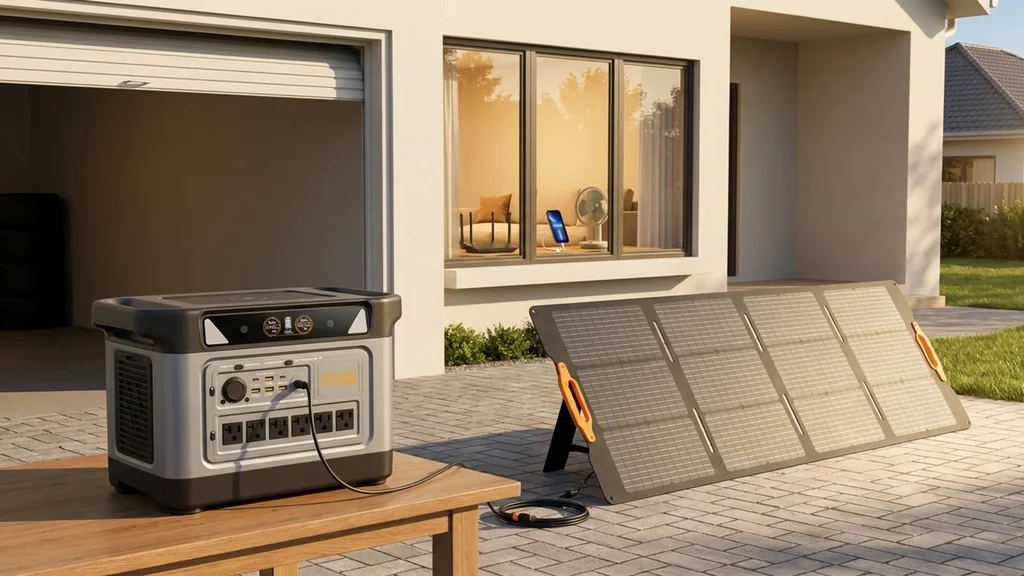
Solar portable generators store electricity in a battery and deliver it through an inverter that converts DC power into usable AC power for household devices. During an outage, they can run appliances directly from onboard outlets or, in some setups, feed selected home circuits through a transfer switch. Their reliability comes from instant battery power, stable output, and no need for gasoline refueling. Solar panels can recharge the battery during daylight, extending use when the weather cooperates. Unlike traditional generators, they operate quietly and produce no exhaust, which makes them practical indoors or near living spaces. For portable generators for home backup, that means dependable power for essentials as long as the unit’s wattage and battery reserves are sufficient.
What Affects Their Reliability During Extended Outages?
Extended outages test the limits of any battery-based backup system. Reliability depends first on load management: the more devices you run, the faster stored energy disappears. High-draw appliances such as space heaters, ovens, and central air can drain batteries quickly or exceed inverter limits. Weather also matters because solar input falls on cloudy days, in winter, or when panels are shaded. Charging speed is another factor; slow solar recovery can leave the battery underprepared for a second night without grid power. Battery chemistry and cycle life affect long-term dependability, while transfer speed matters for sensitive electronics. A well-sized system with efficient appliances, disciplined usage, and fast recharging stays reliable far longer during outages.
What Can Solar Portable Generators Power at Home?
Essential Appliances and Their Power Requirements
A solar portable generator can usually handle the most important household loads first: refrigerator, freezer, lights, phone chargers, Wi-Fi router, laptop, television, CPAP machine, and small fans. Many refrigerators run around 150 to 300 watts once operating, though startup surges can be much higher. Routers and modems often need under 20 watts, LED lighting may use 10 watts per bulb, and a CPAP commonly draws 30 to 60 watts without a heated humidifier. Microwaves, coffee makers, and portable induction cooktops often require 1,000 watts or more. Larger electric dryers, ovens, water heaters, and whole-home air conditioning usually need far more power. Reliable backup starts with prioritizing essentials over every appliance.
Battery Capacity, Runtime, and Solar Recharging Limits
Battery capacity determines how long backup power lasts. A larger watt-hour rating supports essential loads for more hours before recharging becomes necessary. Runtime depends on total consumption: a 100-watt load uses roughly 1 kilowatt-hour every 10 hours, while a refrigerator cycling on and off consumes far less than its startup surge suggests. Solar recharging can extend runtime, but panel size, sun exposure, season, and cloud cover limit recovery. If daily solar input cannot replace overnight usage, available backup shrinks each day. Fast AC charging is often the most dependable way to restore capacity between outages. To judge reliability, match battery size and realistic solar harvest to your actual household emergency load profile.
How to Choose a Reliable Solar Portable Generator for Home Backup
Compare Power Output, Battery Life, and Charging Options
When choosing a reliable unit, start with output power, not marketing claims. Check continuous wattage for sustained loads and surge capability for motor-driven appliances. Next, review battery chemistry and cycle life; LFP batteries generally offer longer service life and better durability for repeated backup use. Then compare charging options. A strong system should support wall charging for fast recovery and solar charging for outage resilience. Expandable batteries add flexibility because home backup needs often grow beyond a single box. Also consider transfer speed, outlet selection, portability, operating temperature, and weather resistance if the system will sit in a garage or outdoors. The most reliable choice is the one sized for real household demands.
Consider Anker SOLIX Home Backup Power Solutions
For homeowners who need stronger backup performance, Anker SOLIX home backup solutions are built for more demanding use. The Anker SOLIX E10 Whole-Home Backup supports 120/240V split-phase power with 7,680W continuous output and up to 10,000W turbo output for 90 minutes, helping it start heavy loads, including up to a 5-ton central A/C. Each battery provides 6,144Wh, with expansion up to 30kWh on one power module, and the LFP battery is rated for 4,000+ cycles. It also supports up to 9kW solar input, 9,600W AC input bypass, IP66 protection, and seamless switchover of ≤20ms. Those specifications make it a stronger option for serious home backup planning.
Conclusion
Yes, solar portable generators can be reliable for home backup when they are properly sized for the appliances you actually need during an outage. They perform best for essential loads, quiet overnight use, and situations where clean indoor-safe operation matters more than unlimited runtime. Their main limits are battery capacity, high-wattage appliances, and how quickly solar charging can replenish stored energy during multi-day outages. That is why reliability comes down to matching output, runtime, and charging speed to your emergency plan. If you want dependable backup for more than phones and lights, look closely at continuous power, surge handling, battery expansion, and transfer performance. A well-chosen system can provide stable, practical backup power and reduce outage stress at home.