
Running a farm requires more than growing crops. Farmers must organize workers, prepare fields, move supplies, maintain equipment, and complete important activities within limited timeframes. When experienced agricultural workers are difficult to find, even routine tasks can become challenging. A shortage of available labour may delay planting, increase pressure on existing employees, and make it harder to complete essential field operations. This is why many agricultural businesses are looking for practical ways to organize their workloads more efficiently.
One approach involves using suitable machinery to support activities that would otherwise require considerable manual effort. Working with an OEM tractor manufacturer can help agricultural businesses explore tractor configurations suited to different operational requirements. However, machinery alone cannot solve every labour challenge. Farmers also need trained operators, realistic schedules, appropriate attachments, and clear plans for coordinating people and equipment.
Understanding Why Farm Labour Availability Matters
Agricultural workloads change throughout the year. Some weeks require relatively little field activity, while planting and harvesting periods can create considerable pressure.
Farmers may need several workers at the same time, especially when weather conditions provide only a short opportunity to complete a task.
When sufficient labour is unavailable, important activities may take longer than planned. This can create additional expenses and interfere with later farming operations.
Machinery can help reduce the physical effort involved in certain tasks, but it must be introduced thoughtfully.
The objective should be to improve how work is completed while maintaining safe conditions and supporting the people responsible for daily agricultural operations.
Identify the Tasks That Create the Biggest Delays
Before investing in additional equipment, farmers should examine which activities consume the most time.
Some tasks require skilled workers, while others involve repetitive physical effort that suitable machinery may help reduce.
For example, transporting supplies across a large farm can take considerable time when materials are moved manually.
A tractor with an appropriate trailer may make this work more manageable.
Farmers should observe regular operations and identify activities that frequently cause delays.
They should also consider whether existing equipment is being used effectively.
Sometimes, better scheduling or improved attachment management can solve a problem without requiring the purchase of another machine.
Organize Agricultural Work Into Practical Groups
Farm operations often involve several connected activities. Moving between unrelated tasks can waste time and create unnecessary equipment movement.
Grouping similar jobs can make daily operations easier to manage.
For example, a tractor may complete cultivation work in neighbouring fields before being prepared for a different activity.
A practical work plan can include:
- Task priority: Identify work that must be completed within a particular period.
- Equipment availability: Confirm that the required tractor and attachments are ready.
- Operator assignments: Allocate responsibilities according to training and experience.
- Field conditions: Consider weather, soil moisture, and access routes.
- Expected duration: Allow realistic time for each activity.
Organized schedules help workers understand their responsibilities and reduce avoidable confusion.
Reduce Unnecessary Manual Transportation
Moving agricultural materials is an important but sometimes overlooked part of farm management.
Seeds, fertilizers, tools, containers, and harvested produce often need to be transported between storage areas and fields.
On larger farms, these movements can consume considerable working time.
Tractors equipped with suitable trailers can support transportation activities, provided the equipment is properly matched and operated within its rated limits.
Farmers should also consider the location of storage buildings and frequently used supplies.
Keeping materials in practical locations may reduce unnecessary travel.
Combining suitable machinery with better farm organization can make everyday transportation more efficient without requiring major changes to the agricultural operation.
Match Tractor Operations With Available Workers
A tractor is most useful when it becomes part of an organized working system.
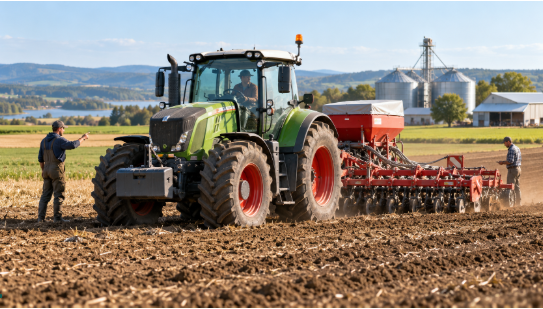
For instance, an agricultural team may have one trained operator preparing land while other workers inspect planting equipment and organize supplies.
This arrangement can help reduce interruptions between activities.
However, operating machinery does not eliminate the need for human judgement.
Workers still need to monitor field conditions, check equipment, and respond to unexpected problems.
Farm managers should avoid assuming that one tractor can automatically replace a particular number of employees.
The labour required depends on the task, machinery, farm layout, and level of mechanization already in place.
Why Different Tractor Configurations Support Different Workloads
Not every farming operation requires the same type of tractor. Some agricultural businesses need compact machinery for restricted spaces, while others regularly handle larger implements across open fields.
Exploring available configurations through an OEM tractor manufacturer can help businesses understand the machinery options available for their intended tasks.
Depending on the model, manufacturers may offer different horsepower capacities, transmission arrangements, tyres, cabins, and hydraulic configurations.
These features influence how machinery can be used during agricultural operations.
For example, suitable transmission options may help operators maintain the working speeds required by particular implements.
Before selecting equipment, farmers should confirm attachment compatibility, operating requirements, and the practical demands of their work.
Invest in Operator Training and Practical Skills
Introducing additional machinery creates a need for people who understand how to use it correctly.
A tractor operator should know more than how to start the engine and move the machine.
Proper training includes understanding controls, connecting approved attachments, checking equipment condition, and recognizing unsafe situations.
Workers should also understand the manufacturer’s operating instructions and maintenance requirements.
Agricultural businesses can support skill development through supervised practice and suitable training programmes.
Experienced operators may help new employees become familiar with everyday procedures.
Investing in skills can improve equipment use and create opportunities for workers to take on more specialized responsibilities within agricultural operations.
Balance Mechanization With Human Experience
Agricultural technology works best when combined with practical farming knowledge.
Tractors can provide power for demanding activities, but they cannot independently make every decision involving crops, weather, or soil conditions.
Farmers and agricultural workers still need to determine when fields are suitable for cultivation and whether equipment is performing correctly.
Mechanization may also change the types of jobs available within a farming business.
While certain manual activities may require less labour, equipment operation, maintenance, and technical support can create different responsibilities.
A balanced approach helps agricultural businesses introduce machinery without overlooking training, workplace safety, or the importance of experienced employees.
Consider Operating Costs Alongside Labour Savings
Reducing manual work does not automatically mean reducing total farming expenses.
Tractors require fuel, servicing, replacement components, and trained operators. These costs need to be considered when evaluating mechanization.
Farmers should compare the expected benefits of machinery with the expenses involved in purchasing and operating it.
For example, completing an activity more quickly may be valuable when it allows planting to take place within suitable weather conditions.
However, using an expensive machine for an occasional task may not be financially sensible.
Recording operating hours, fuel expenses, and completed work can help businesses understand whether machinery is delivering practical value.
Protect Soil and Equipment During Busy Periods
When agricultural work falls behind schedule, there may be pressure to operate machinery continuously.
However, rushing field operations can create additional problems.
Using heavy equipment when soil is excessively wet may cause compaction and damage soil structure.
Similarly, operating tractors without sufficient inspections can increase the risk of mechanical problems.
Farm managers should encourage operators to follow suitable maintenance schedules and assess field conditions before beginning work.
Allowing time for equipment checks is an important part of responsible planning.
The aim is not simply to complete more work in less time, but to do so without creating avoidable risks for employees, machinery, or agricultural land.
Prepare for Equipment and Scheduling Problems
Even well-organized farming operations experience unexpected interruptions.
A tractor may require repairs, an operator may become unavailable, or rainfall may prevent planned fieldwork.
Businesses should prepare reasonable alternatives for these situations.
Possible arrangements include identifying local repair services, maintaining essential replacement parts, and keeping reliable communication between farm managers and workers.
Some operations may also benefit from access to temporary machinery services when their own equipment is unavailable.
A contingency plan cannot prevent every delay, but it can help a farming business respond more effectively when normal operations are interrupted.
Measure Improvements Through Real Farm Results
The success of agricultural mechanization should be evaluated through actual performance rather than assumptions.
Farmers can compare working hours, operating expenses, task completion times, and equipment downtime before and after introducing changes.
They should also gather feedback from employees.
Workers often notice practical problems that may not appear in financial records, such as difficult equipment connections or inefficient working routes.
Reviewing this information helps identify which improvements are worthwhile.
Over time, agricultural businesses can develop better operating procedures and make more informed decisions about future machinery investments.
Conclusion
Labour availability is an important challenge for many agricultural businesses, particularly during busy farming periods. Carefully planned mechanization can help reduce demanding manual work, improve task organization, and support more efficient use of available employees. For farms and agricultural businesses exploring different machinery configurations, gengjiaagri.com presents tractors across a range of horsepower categories, along with OEM and ODM customization options that may suit different operating requirements.
The greatest benefits come from combining appropriate machinery with skilled people and thoughtful planning. Tractors can support transportation, fieldwork, and other demanding activities, but reliable agricultural operations still depend on training, maintenance, safe working practices, and good management. By approaching mechanization as part of a wider labour and equipment strategy, farming businesses can build more practical and adaptable working systems for the future.