
Here is the thing nobody mentions when you walk into an appliance shop. The electric kettle you pick in five minutes will boil water for you three times a day for the next five years. That is roughly 5,400 boiling cycles. Think about that for a second. The decision deserves more than a glance at the shelf. Most first-time buyers pick based on how a kettle looks. Three months later they regret it. Not because the product failed. Because they never thought about what they actually needed.
Size Is The One Thing You Cannot Change Later
1.7 litres. That is the standard electric kettle capacity across most brands and it suits roughly 80% of Indian households without drama.
Smaller? Fine for a bachelor. Fine for two people who make chai individually at different times. Terrible the moment three guests show up expecting tea at the same time. You will boil twice. You will apologise to someone.
Bigger than 1.7? Unnecessary unless you cook with boiled water regularly or run a small home office with a tea round every afternoon. The extra capacity costs you boil time. The body gets heavy.
Check the minimum fill line before you pay. An electric kettle with a high minimum line forces you to boil 500ml even when you want 150ml for a single cup. That wastes electricity and your time. Models with a low minimum let you boil just one cup worth. Adds up over five years.
Wattage Is How Long You Stand Waiting
Simple maths. Higher wattage, faster boil. Lower wattage, slower boil. That is it.
A 1500W electric kettle will bring a full 1.7 litres to rolling boil in roughly four minutes. A 1200W model doing the same job takes closer to six. Two minutes per boil does not sound like much. Multiply across your week and it adds up to almost half an hour of standing around waiting for water that could have been boiled already.
My honest recommendation. Do not buy anything below 1500W. Full stop. The cheaper lower-wattage models exist but they teach you to resent your purchase within a month.
Material Matters More Than The Showroom Lighting Suggests
Three materials cover the entire market. Steel, glass, plastic. Each one lives differently in your kitchen:
| Material | Durability | Weight | Flavour Neutrality | Lifespan |
| Stainless Steel | High, dent resistant | Heavier than alternatives | Excellent, no absorption | 5 to 8 years with basic care |
| Glass | Moderate, fragile on impact | Medium | Excellent, completely inert | 3 to 5 years if handled carefully |
| Plastic (BPA-free) | Moderate, flexes under stress | Lightest option | Declines over 12 to 18 months | 2 to 3 years before taste issues |
Steel is the sensible default. Does not stain. Does not absorb odours. Still looks respectable after three years of daily use. One caveat though. The exterior gets properly hot during boiling, which matters in homes with small children.
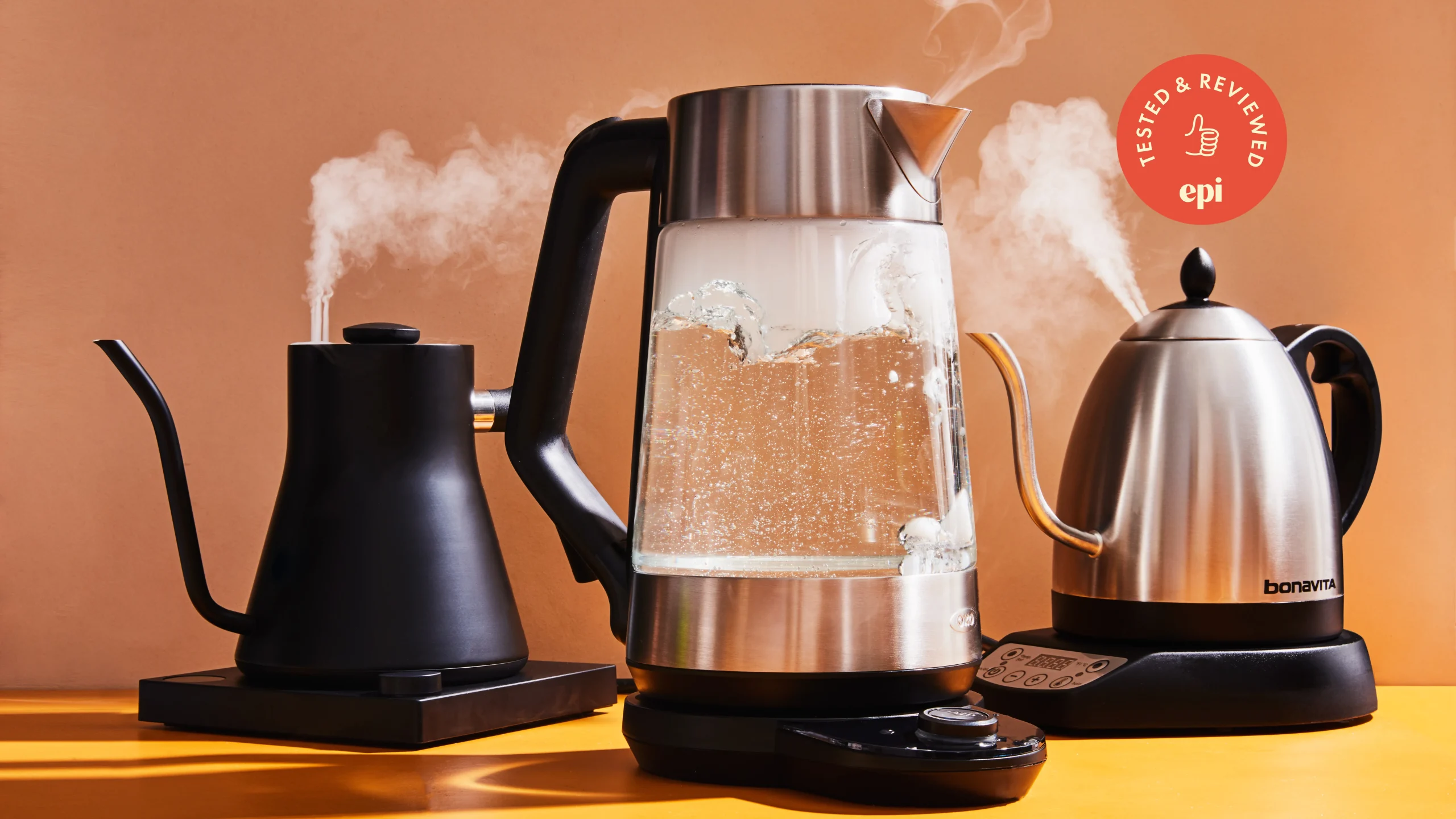
The attractive choice is glass. You get to see your water as it boils, an experience many people enjoy. The downside is that it breaks easily. If you drop it once, it’s gone forever. Glass will show the deposition of scale too, which will mean you have to descale more frequently since it happens in places like Delhi and certain parts of Maharashtra.
The economical option is plastic. Most plastics are now food-grade and it is perfectly fine to boil water in them. What you won’t find written on the packaging, however, is that after around 12 to 18 months of constant use to boil your water, the plastic lining gives your water an indefinable taste. This does not happen with steel or glass.
Safety Features That Should Already Be There
Auto shut-off. Boil-dry protection. Both should come standard on anything you buy today. If a kettle at a decent price does not have them, walk away.
Auto shut-off turns the kettle off the moment water reaches boil. Saves electricity. Protects the heating element. More importantly, saves you from the panic of realising twenty minutes later that you forgot the kettle was on.
Boil-dry protection does the same if you accidentally switch on an empty kettle. It happens. Someone tells you to make tea while you are distracted. The kettle goes on before the water goes in. Without boil-dry protection, you just destroyed your heating element in under a minute.
A locking lid is worth insisting on too. Loose lids let steam escape in random directions. Locking lids channel the steam through the designated vent. Cordless designs that lift off a powered base are standard now. Insist on cordless.
Do You Really Need Temperature Control
Honest answer? Probably not.
Standard electric kettles heat water up to 100°C and then stop doing so. This is sufficient for the majority of people who brew regular tea or coffee and cook quickly. Kettles with variable temperature can heat water up to 70-80°C for green tea, 85°C for white tea, and boiling temperature for black tea or coffee.
The tricky thing here is that if you are not using green or oolong tea right now, then you probably won’t be doing so just because you have a kettle that can heat water at those temperatures. Only people interested in specialty coffee or good tea can use this function, others not.
Keep-warm functions, however, are quite useful. You can keep water hot for 30 minutes after it has boiled, solving the issue of distractions during the time between turning the kettle on and making yourself a drink.
Conclusion
Selecting your first electric kettle isn’t about loyalty to a brand or its appearance. There are five practical factors which will determine whether this appliance will be the reliable tool of your kitchen or the product you will regret purchasing and placing in a corner. Adequate capacity according to your needs. Wattage of at least 1500 watts. Selection of material based on functionality, not appearance. Auto shut-off and boil-dry as indispensable safety features. And proper evaluation of the necessity of temperature control for your personal preferences.