
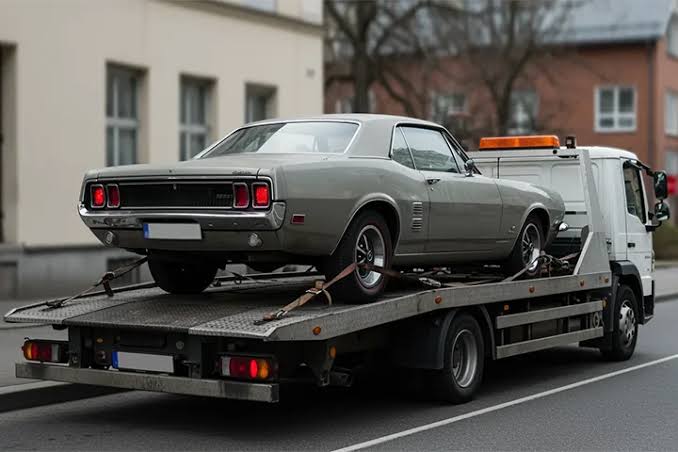
If you’re moving a classic car across the country, the safest approach is usually enclosed transport with soft-tie straps, a hydraulic liftgate, and cargo insurance that matches the car’s value. Enclosed trailers protect the vehicle from weather and road debris, while the right loading equipment reduces the risk of damage to low, lowered, or delicate cars. Expect to pay more than for open transport, especially during major auction and show seasons.
Classic cars routinely travel between auctions, shows, storage facilities and buyers across the country. Owners in Arizona may ship to California for a concours, move a car to Florida for winter storage, or send a newly purchased vehicle to New England without putting thousands of miles on the odometer.
The process is straightforward, but experienced collectors tend to focus on a few details that matter more with a high-value vehicle: the trailer type, loading method, insurance coverage, and the carrier’s experience handling collector cars.
Key Takeaways
- Collectors almost always ship classic cars in enclosed trailers, which typically cost 30–50% more than open transport.
- Enclosed transport generally runs about 1,100–1,600 per 1,000 miles, depending on route, season, and the size of the car.
- Soft-tie wheel straps and a hydraulic liftgate matter as much as the trailer itself, especially for low or lowered cars.
- Cargo insurance of $250,000 per vehicle is common on enclosed trailers. If the car is worth more, ask for higher coverage and confirm what your own collector policy covers in transit.
- Demand for enclosed transport rises around major auction and concours dates, especially January in Scottsdale and August on the Monterey Peninsula.
Why Collectors Choose Enclosed Transport
Open trailers move the large majority of everyday cars in the United States, and they do it safely. For a classic, though, the risks look different. Original paint and chrome are hard to replace, rubber seals on older cars do not always keep out driving rain, and a single piece of road debris can mean a professional respray that costs more than the transport itself.
Enclosed trailers solve those problems. The car is protected from weather, road salt, dust, and debris, and it is out of sight for the whole trip. Most enclosed trailers also carry fewer vehicles, usually between one and seven, which means fewer stops and less loading and unloading along the way.
What Enclosed Transport Costs
Expect enclosed transport to cost 30–50% more than open transport on the same route. As a working figure, enclosed shipping generally falls between $1,100 and $1,600 per 1,000 miles. Several factors push the price toward the top of that range:
- Single-car or dedicated trailers instead of a shared multi-car enclosed truck
- Liftgate loading for low-clearance cars.
- Non-running vehicles that need a winch
- Peak dates around major auctions and shows
- Rural pickup or delivery points far from main highways
| Option | Typical cost difference | Best for |
| Open transport | Baseline | Daily drivers, project cars |
| Shared enclosed trailer | +30–50% over open | Most classics and collector cars |
| Dedicated enclosed trailer | Highest | High-value, rare or concours cars |
The Equipment Questions Collectors Always Ask
The trailer type is only half the decision. Experienced owners ask how to load and secure the car.
- Liftgate or ramps? A hydraulic liftgate raises the car level onto the trailer. Steep ramps can scrape the front lip, exhaust, or oil pan of a low or lowered car.
- How is the car tied down? Soft-tie wheel straps hold the car by its tires, so nothing touches the frame, suspension, or bodywork. Chains and frame hooks are standard on many trucks but are a poor fit for older or restored cars.
- Who drives it onto the trailer? Ask whether the driver has handled classics before, and tell them about anything unusual: a manual choke, a stiff clutch, a fuel shutoff, a battery kill switch.
- Where does it sit? On multi-level enclosed trailers, the upper deck reduces the risk of fluid drips from cars above.
Insurance: The Part Most Owners Underestimate
Every licensed transport company carries cargo insurance, but the limit matters. On enclosed trailers, $250,000 per vehicle is a common figure. That is plenty for many classics and not nearly enough for others.
Before booking, ask for the insurance certificate, check the per-vehicle limit and the deductible, and find out what is excluded. Then call your own collector car insurer. Many agreed-value policies cover the car while it is being transported, but terms vary, and it is better to know before the truck arrives than after.
Also check that the company has active operating authority. You can look up its MC or USDOT number for free in the FMCSA SAFER database.
Timing Around Auctions and Shows
Enclosed trailers are a smaller part of the transport market, and their schedules fill around the classic car calendar. January brings the Scottsdale auction week in Arizona. August brings Monterey Car Week and the Pebble Beach Concours d’Elegance in California. In the weeks around those events, enclosed space on routes into and out of Arizona and California can be booked well in advance.
Collectors who move cars regularly book enclosed transport three to four weeks ahead around these dates, and two to three weeks ahead the rest of the year. They also keep pickup windows flexible by a few days, which makes it easier for a company to fit the car into a trailer already heading in the right direction.
How to Prepare a Classic Car for Shipping
- Wash the car and photograph or film every panel, the interior, the engine bay, and the odometer.
- Write a short condition report and keep a copy of the latest appraisal.
- Check for fluid leaks and fix them, or tell the driver so a drip pan can be used.
- Leave about a quarter tank of fuel and make sure the battery is charged, or disconnect it if the car will sit for a while.
- Remove loose items, car covers that could flap, and any removable trim.
- Note every existing mark on the Bill of Lading at pickup, and inspect the car in daylight before signing at delivery.
Choosing Who Moves the Car
Collectors tend to work with a short list of companies they trust, but even they compare options for new routes. The useful comparison is not the lowest price. It is enclosed experience, insurance limits, equipment, and how quickly the company can schedule pickup. Comparing several licensed car shipping companies side by side makes those differences easier to see before you commit.
FAQ
How much does it cost to ship a classic car across the country?
Enclosed transport generally costs 1,100–1,600 per 1,000 miles, so a coast-to-coast move often lands between roughly $3,000 and $4,500 depending on route, season, and trailer type.
Is open transport ever acceptable for a classic car?
For a driver-quality classic or a project car, many owners use open transport to save money. For original-paint, restored, or high-value cars, enclosed transport is the standard choice.
Can a non-running classic be shipped?
Yes. Tell the company in advance so it sends a truck with a winch. Expect a higher price.
Does my collector car insurance cover transport?
Many agreed-value policies do, but terms vary. Confirm with your insurer and compare the coverage with the transport company’s cargo insurance limit.