

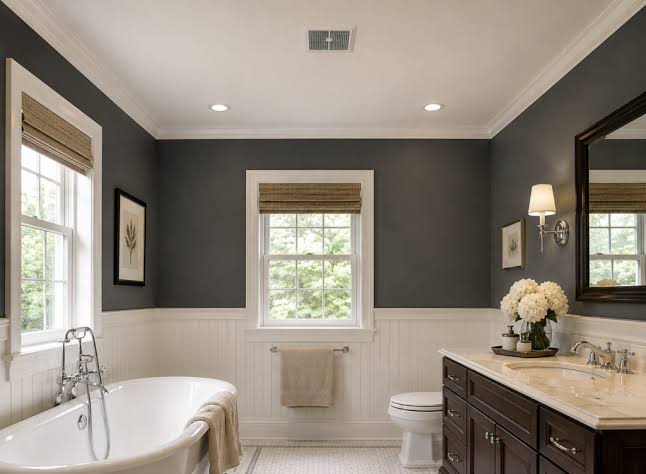
Kitchens and bathrooms are the hardest-working rooms in a home, and their ceilings face conditions that living rooms and bedrooms never encounter. Steam, cooking oil, humidity, and temperature swings can quickly damage the wrong material. Choosing a ceiling that suits these conditions will protect your investment and keep the spaces looking clean for years.
Understanding the Challenges
In a kitchen, rising hot air carries fine particles of oil and smoke, which settle on the ceiling and can stain or attract dust. In a bathroom, warm showers create heavy condensation that can soak into porous surfaces, leading to peeling paint, mould, and sagging boards. Both rooms need ceilings that resist moisture, tolerate heat, and can be wiped or washed without damage.
Material Options
Moisture-resistant gypsum boards, often identified by a green or special-coloured facing, are treated to absorb less water than standard boards. They can be finished with waterproof paint and work well in bathrooms with adequate ventilation. PVC panels are another popular choice because they are inherently water-resistant and can be cleaned with a damp cloth. For kitchens, aluminium or metal tiles and fibre cement boards are durable options that handle heat and are easy to clean. Avoid standard POP or untreated boards in wet areas, since they can swell, crack, or grow mould.
Ventilation Is Non-Negotiable
No ceiling material can compensate for poor airflow. Install an exhaust fan in the bathroom and a chimney or hood in the kitchen, and ensure ducts lead outside rather than into the ceiling void. Trapped moisture inside the cavity is a common cause of hidden damage. Include access panels so that fans, ducts, and wiring can be serviced without cutting the ceiling.
Lighting and Fixtures
Use fixtures rated for the environment. In bathrooms, choose IP-rated spotlights suitable for damp or splash-prone zones, and keep fixtures away from direct shower spray. In kitchens, bright and neutral lighting makes cooking safer, so combine recessed lights with under-cabinet task lighting. Keep fixtures sealed and flush so that grease and steam have fewer places to accumulate.
Finishing and Cleaning
Select satin or semi-gloss, washable paint for kitchen ceilings so that grease can be wiped away. In bathrooms, anti-fungal paints add an extra layer of protection. Make it a habit to clean the ceiling surface and vents periodically, because buildup becomes harder to remove the longer it stays. Watch for early signs of trouble, such as discolouration, bubbling, or musty smells, and address leaks promptly.
Many homeowners avoid ceiling work in these rooms because they assume it is complicated, but a simple, well-chosen design can be both stylish and functional. If you are considering false ceiling designs for kitchens and bathrooms, ask about moisture-rated boards, sealants, and ventilation planning. For general guidance on selecting suitable finishes, a visit to a resource on ceiling materials and styles can help you shortlist options.
Homeowners who cook frequently should also think about heat from stoves and ovens, which can warm the ceiling directly above and affect certain adhesives and paints over time. Choose finishes rated for higher temperatures near the cooking zone, keep a safe distance between flames and any combustible surface, and place smoke detectors where they will not be set off by normal cooking. In bathrooms with geysers or heaters, similar caution applies, since sustained warmth combined with moisture can quickly weaken ordinary materials. Review these details with your installer before work begins.
A durable, easy-care ceiling in the busiest rooms of your house will quietly save you time, money, and repair headaches over the long term.