
Picking a manufacturing method before you understand your batch size is one of the most common — and most expensive — mistakes in product development. Teams default to 3D printing because it’s fast, or jump straight to injection molding because it’s what final production uses, and end up paying for speed or tooling they didn’t actually need. Rapid prototyping services exist precisely to bridge that gap, and among the available techniques, vacuum casting service providers solve a problem the other two methods struggle with: getting dozens of production-quality parts without cutting steel.
What Do Rapid Prototyping Services Actually Cover?
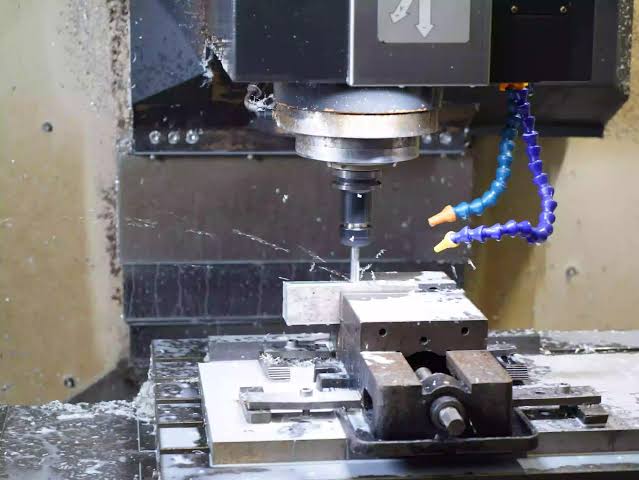
Rapid prototyping services refer to a group of manufacturing techniques used to turn a CAD file into a physical part quickly, before committing to full-scale production tooling. The three workhorses are 3D printing, CNC machining, and vacuum casting.
Each technology answers a different question:
- 3D printing— best when you need a single complex geometry fast, for early concept validation.
- CNC machining— best when strength, tight tolerances, or functional testing under load matter more than speed.
- Vacuum casting— best when you need a small series of parts, typically rapid prototyping service, consumer products, and short-run batches, especially when using a high quality master model to replicate complex features.
None of these methods is universally “better.” A prototype that needs to survive a drop test belongs in CNC machining. A one-off design review model belongs in 3D printing. Anything in between — say, 20 housings that need to look and feel like the real product — is where vacuum casting earns its place.
How Does Vacuum Casting Fit Into a Rapid Prototyping Workflow?
Vacuum casting is a process where a silicone mold, built from a 3D-printed or CNC-machined master model, is used to cast liquid polyurethane resin under vacuum. The vacuum pulls the resin into every cavity of the mold, which eliminates trapped air bubbles and captures fine surface detail — down to a surface roughness as low as Ra 0.8 μm in well-controlled processes.
The typical workflow looks like this:
- A designer supplies a CAD file, which is machined or printed into a master model.
- The master model is encased in liquid silicone to create a two-part mold.
- Polyurethane resin (standard, transparent, or ABS-like, depending on the application) is poured into the mold under vacuum.
- Cast parts are demolded, trimmed, and finished — sanded, painted, or pad-printed as needed.
- The same silicone mold is reused for the remaining units in the batch, usually good for 20-25 casts before quality starts to degrade.
That reusability is what makes vacuum casting service pricing so different from 3D printing, where every unit costs roughly the same regardless of quantity. It’s also different from injection molding, where the steel tool costs a fortune upfront but the per-part price drops sharply at scale.
Why Choose Vacuum Casting Over 3D Printing or CNC Machining?
The honest answer is: only sometimes. Vacuum casting isn’t a universal upgrade — it’s the right tool for a specific window of production volume and material need.
Cost and volume. 3D printing carries the lowest upfront cost for a single part, but that per-unit cost barely changes with quantity. Vacuum casting flips the economics: the silicone mold is an upfront investment, but each additional cast part gets progressively cheaper. In practice, that crossover point tends to land somewhere between 10 and 50 units — below that, printing is usually still cheaper; above it, injection molding starts to make more sense.
Speed for mid-size batches. CNC machining produces the most durable parts, but multi-part batches take real setup time on the machine. Vacuum casting, once the master and mold exist, can turn around a batch of parts within roughly a business week from mold to finished set — one supplier reported delivering 15 functional automotive prototypes within two weeks using this method.
Material realism. This is where vacuum casting genuinely outperforms the alternatives for consumer-facing prototypes. Because polyurethane resins can be tinted, textured, and finished to closely mimic ABS, PP, or even rubber-like overmolds, the resulting parts don’t just function like the final product — they look and feel like it too. That matters enormously for investor demos, crowdfunding campaigns, and user testing, where a visibly “prototype-grade” part undermines the pitch.
The trade-off is durability. Cast polyurethane parts don’t hold up to the same fatigue or heat resistance as machined metal or true injection-molded thermoplastics, so they’re rarely the right choice for load-bearing or long-term functional testing.
How Do You Choose a Vacuum Casting Service Provider?
Not every supplier that lists vacuum casting on their site runs it well. A few things worth checking before committing a batch:
- ISO 9001 is table stakes; ISO 13485 matters if the parts are medical.
- Master model capability.Ask whether they build the master in-house via CNC or 3D printing, since the mold quality is only as good as the model it’s cast from.
- Material range.Confirm they stock the resin type you actually need — clear PU, ABS-like, or flexible rubber-like grades aren’t universally available.
- Sample order first.Before committing a full batch, request a small trial run to judge finish quality, tolerance consistency, and turnaround honesty.
Getting the Right Process for Your Batch
Rapid prototyping isn’t a single decision — it’s a set of tools, and the right one depends on where a project sits between “does it look right” and “does it survive real-world use.” For anything in the 5-to-100-unit range that needs to look and behave like the finished product, a vacuum casting service is hard to beat on cost and turnaround. Outside that window, don’t force it — 3D printing and CNC machining remain the better call for single prototypes or functional stress testing.