
A worn notebook beside a railway ticket can suggest a turning point without showing a face. For a short video accompanying a written biography, I would begin with that quiet arrangement rather than a dramatic reconstruction of somebody’s childhood. The proposed film would follow a fictional scholarship student preparing to leave home, using objects to convey anticipation. Its purpose would be to introduce the emotional theme of a story while leaving factual reporting to the accompanying article.
My starting material would be deliberately modest: an original photograph of a desk, a close view of a plain notebook, a short recording of a ceiling fan, and a written description of morning light. None would be presented as an archive belonging to a real public figure. I would label the finished sequence as an illustrative scene, giving viewers room to enjoy its atmosphere without mistaking invented images for historical evidence.
Finding movement inside a still arrangement
The challenge is making the desk feel inhabited without filling it with invented events. A corner of paper might lift in the fan’s breeze; light could move across the notebook as the camera advances. These small actions give the audience something to watch while preserving the simplicity of the scene. My opening shot would stay low enough to notice the scratched wood, with the doorway visible only as an out-of-focus shape behind it.
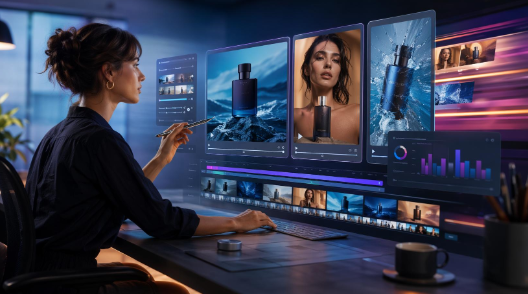
That combination of a written scene and visual references is the creative starting point for Seedance 3.0, an AI video model supporting text-to-video, image-to-video, and reference-based generation. Text, images, video, and audio can contribute to a reference-led scene. For this particular concept, I would assign each input a distinct purpose: the photograph establishes the desk, the written description defines the movement, and the sound reference suggests the unhurried rhythm of the room.
I would resist adding a train, a station crowd, and a farewell in the same generation. The desk already contains the departure. A tightly chosen view can create more interest than a sequence that races through every possible symbol of ambition. Before making another shot, I would decide which object the viewer should notice first and which detail should only become clear near the end.
A notebook becomes the visual thread
The notebook would appear in three proposed shots. First it rests closed on the desk. Next, its cover moves slightly as a hand approaches from outside the frame. Finally, it occupies the edge of a packed cloth bag. That progression gives the film a beginning, a decision, and a destination without requiring a fictional person to deliver a speech. The bag’s fabric and the notebook’s plain cover would be consistent across the reference images.
With Seedance 3.0, I would approach each of these as a separate visual problem rather than assuming one long instruction will preserve every detail. The first brief might read: early morning in a modest room, closed blue notebook on a scratched wooden desk, a gentle forward camera movement, one loose paper corner lifting, soft light entering from the left. I would keep the notebook still and the background subdued so the slight paper movement remains legible.
The middle shot in Seedance 3.0 needs a different kind of restraint. A complex hand action could distract from the mood if the fingers or cover behave strangely. My initial version would show a sleeve entering the frame and a shadow crossing the notebook, ending before the actual lift. An ordinary cut can imply the action more cleanly than asking the generated image to explain every stage of it.
Letting sound suggest the world beyond the room
A distant bicycle bell and the fan’s soft pulse could make the room feel connected to a waking street. I would record or license those sounds specifically for the edit. An audio reference can guide the creative intention, but I would still inspect whatever sound accompanies a generated shot and assemble the final mix deliberately. The story should not depend on an assumption that every visual motion will arrive with the exact sound I imagined.
During the Seedance 3.0 reference stage, a short, personally recorded camera move could communicate the slow approach more clearly than a pile of movement adjectives. I would select a reference with one steady direction and no sudden swing. Its role would be to suggest pace and framing, not to introduce the room or objects shown in that separate piece of footage. Keeping those jobs distinct makes the intended result easier to describe.
The music, if any, would enter late. A simple sustained note under the final shot might be enough. Beginning with a triumphant score would tell viewers what to feel before the objects have established a mood. I would rather let the paper, light, and quiet room create anticipation, then allow the sound to broaden when the notebook reaches the bag.
Revising a shot that becomes too busy
Suppose the opening draft adds fluttering pages, drifting curtains, and a strong camera sweep. Even if each effect is attractive, their combination changes a quiet departure into a miniature spectacle. My Seedance 3.0 revision would remove two movements and shorten the camera travel. I would also simplify the reference photograph by excluding decorative objects that could become competing focal points. The goal is a believable visual hierarchy: notebook first, ticket second, doorway last.
For a second Seedance 3.0 attempt, I would preserve the strongest reference and change only the part of the brief responsible for the distraction. If the notebook shifts color between shots, I would provide a clearer view of its cover and reduce competing blue objects nearby. If the doorway bends during the camera move, I would try a more static composition instead of accepting the distortion as an inevitable part of the style.
The ticket deserves particular care. I would keep any generated writing unreadable and add a fictional destination as an ordinary graphic in the editing stage if the story needs it. Real dates, institutions, quotations, and achievements belong in verified captions. Decorative generated text should never become a source for a biography, especially when the video sits beside an article about an identifiable person.
Ending at the threshold
The finished sequence would run only as long as the three images remain interesting. I would cut from the desk to the approaching sleeve on a soft change in sound, then reveal the notebook in the bag near the open doorway. There would be no manufactured embrace or invented speech. A brief closing caption could identify the film as an illustrative study of leaving home, followed by the title of the accompanying written story.
Seedance 3.0 would serve the creation of these individual moving images; the edit would supply their relationship. I would watch the assembled version with the sound off to check whether the notebook’s journey is clear, then listen without the picture to judge whether the fan and street sounds feel continuous. If the last shot already suggests a new chapter, I would end there. A life story does not need every event reenacted to offer a compelling first glimpse.