
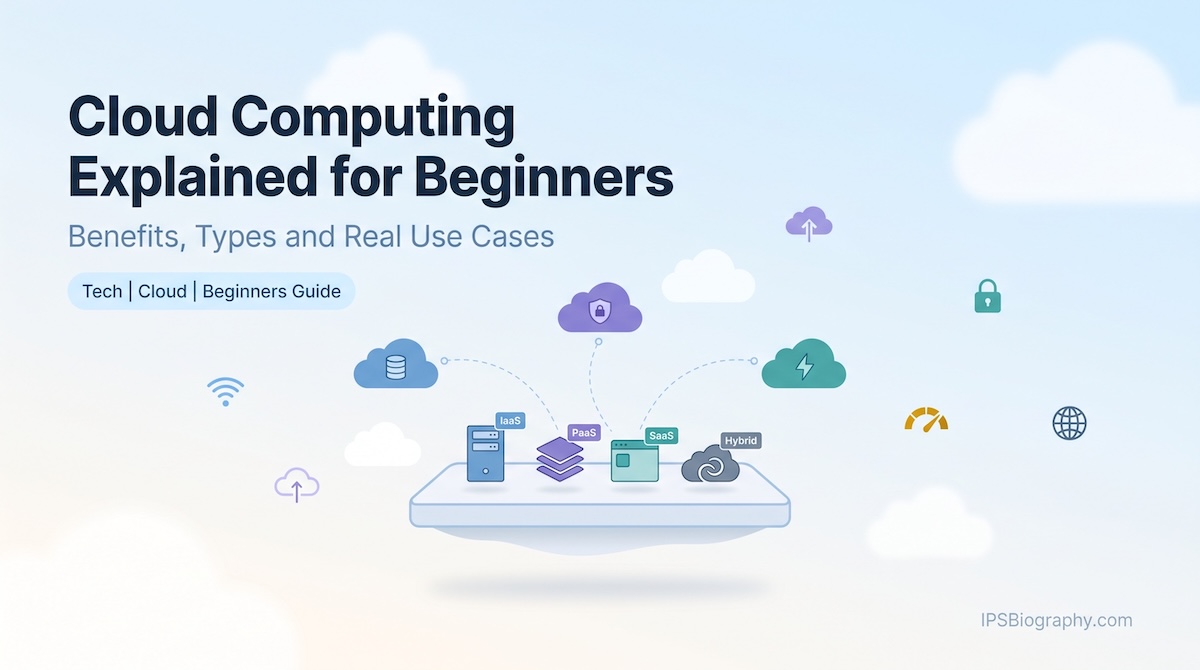
Cloud computing has become one of the most important technologies in today’s digital world, but many people still don’t fully understand how it works. Most businesses use cloud services daily without even realizing it.
If you use online storage, streaming platforms, or web-based tools, you are already using cloud computing. Understanding it properly can help you make better decisions for both personal and business use.
What Cloud Computing Actually Means
Cloud computing simply means storing and accessing data or software over the internet instead of using your local computer. Instead of saving files on your device, you store them on remote servers.
These servers are managed by companies that provide cloud services, so you don’t need to handle hardware or maintenance. This makes technology more accessible and efficient.
The main idea is convenience, scalability, and accessibility from anywhere with an internet connection.
Why Cloud Computing Is Growing So Fast
Cloud computing is growing because it reduces cost and increases flexibility for businesses and individuals. You don’t need to invest in expensive infrastructure to get started.
Companies can scale their resources based on demand, which helps them avoid unnecessary expenses. This flexibility is one of the biggest advantages of cloud technology.
It also supports remote work, which has become more common in recent years.
Types of Cloud Computing You Should Know
There are different types of cloud services, and each serves a different purpose. Understanding them helps you choose the right solution.
The main types include:
- Public cloud, where services are shared and available to everyone
- Private cloud, which is used by a single organization for more control
- Hybrid cloud, which combines both public and private systems
Each type offers different levels of security, cost, and control depending on your needs.
Common Cloud Service Models
Cloud computing is also divided into service models based on what you are using. These models define how much control you have.
The three main models are:
- Infrastructure as a Service (IaaS), where you control servers and storage
- Platform as a Service (PaaS), where you build applications without managing hardware
- Software as a Service (SaaS), where you use software directly through the internet
Most people use SaaS products daily without thinking about it.
Real-Life Examples of Cloud Computing
Cloud computing is used in many everyday applications. When you use email services, online storage, or streaming platforms, you are using cloud technology.
Businesses use cloud tools for data storage, collaboration, and application development. This allows teams to work together from different locations.
Even small businesses can use advanced tools without heavy investment, which was not possible before.
Benefits of Using Cloud Computing
One of the biggest benefits is cost savings because you don’t need to buy or maintain hardware. You only pay for what you use.
Cloud services also offer high scalability, so you can increase or decrease resources based on your needs. This makes it ideal for growing businesses.
Another advantage is accessibility. You can access your data and applications from anywhere, which improves flexibility and productivity.
Security in Cloud Computing
Many people worry about security when using cloud services, but most providers invest heavily in security systems. In many cases, cloud storage is safer than local storage.
However, users still need to follow basic security practices like strong passwords and proper access control.
Security is a shared responsibility between the provider and the user.
Challenges and Limitations
While cloud computing offers many benefits, it also has some limitations. One of the main issues is dependency on internet connectivity.
If your internet is slow or unavailable, accessing cloud services can become difficult. This can affect productivity.
There can also be concerns about data privacy, especially when dealing with sensitive information.
How to Choose the Right Cloud Service
Choosing the right cloud service depends on your needs and budget. You should consider factors like performance, security, and pricing.
Start by identifying what you want to achieve, whether it is storage, application hosting, or collaboration.
Testing different services can help you find the best fit for your workflow.
Future of Cloud Computing
Cloud computing will continue to grow as more businesses move online. New technologies like AI and big data are also being integrated with cloud systems.
This will make cloud services even more powerful and useful in the future.
Companies that adopt cloud technology early will have a strong advantage.
Final Thoughts
Cloud computing is no longer optional, it has become a core part of modern technology. Understanding how it works can help you use it more effectively.
Whether you are an individual or a business owner, cloud computing can improve efficiency and reduce costs.
If you start using it wisely, it can become a powerful tool for growth and productivity.