
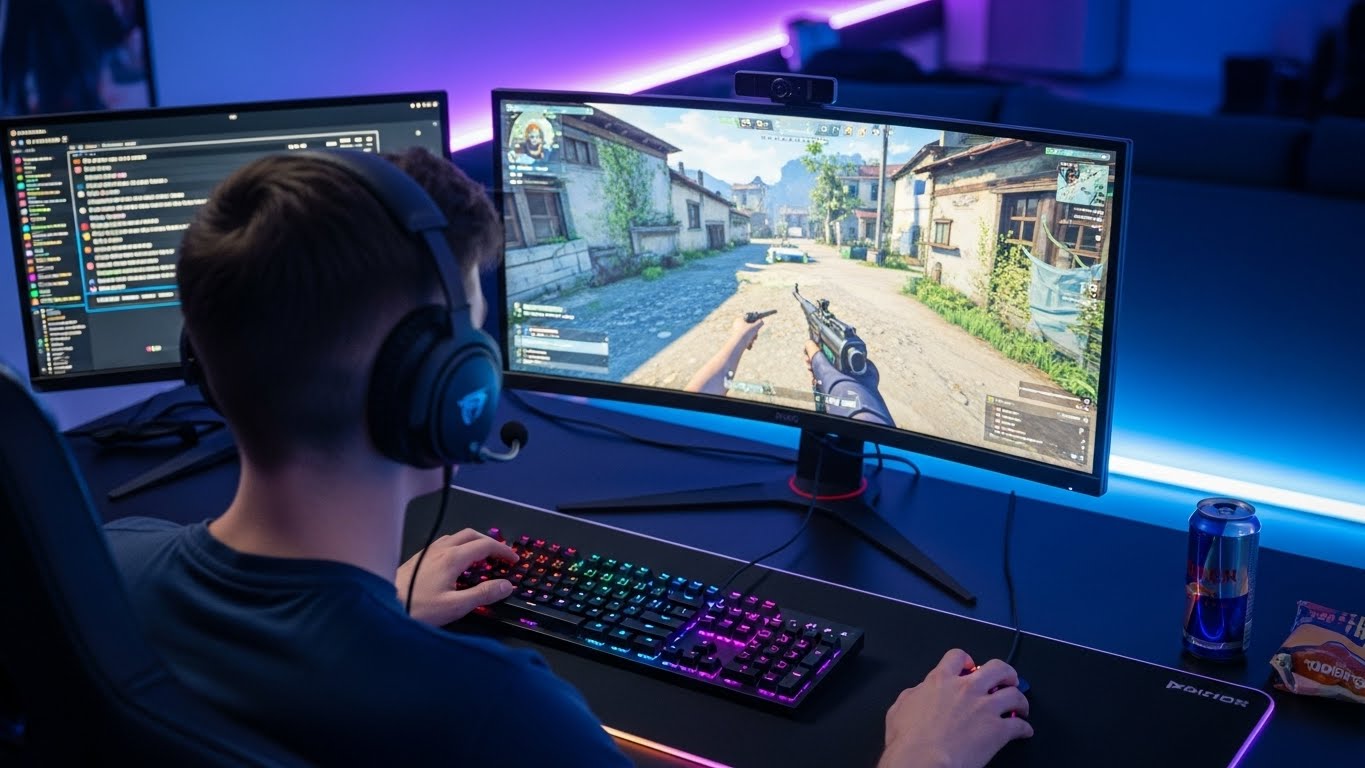
Online slot gacor has grown from a relatively small form of computer entertainment into a global digital phenomenon. Today, people of different ages and backgrounds use computers, smartphones, and gaming consoles to participate in virtual experiences. Players can compete in tournaments, cooperate with friends, explore fictional worlds, and communicate with people they may never meet in person.
The popularity of online gaming is closely connected to the development of the internet. Faster connections have made real-time multiplayer experiences possible, while modern hardware has allowed developers to create increasingly detailed and complex games.
Gaming is now more than simply pressing buttons and completing levels. It has become a combination of entertainment, social interaction, technology, competition, and digital creativity.
The Beginning of Connected Gaming
The earliest forms of multiplayer gaming were relatively limited. Players often had to share the same computer or connect devices through a local network.
The arrival of widespread internet access changed the situation dramatically.
Games could connect players from different locations and allow them to compete in real time. Developers could also maintain online servers, release updates, and create communities around their games.
Over time, online connectivity became a standard feature rather than an unusual addition.
The Modern Online Gaming Experience
A modern online game can offer much more than a traditional gaming session.
Players may begin by creating a digital character, selecting equipment, joining a team, and entering a shared environment. During the session, they can communicate with teammates, complete objectives, earn rewards, and improve their skills.
After the match ends, statistics may be recorded and progress saved online.
The next time the player returns, the game can provide new challenges or content.
This continuous experience is one of the defining characteristics of modern online gaming.
Why Online Games Are So Engaging
Online games provide several psychological and social elements that encourage continued participation.
Competition gives players goals. Progression provides a sense of achievement. Teamwork creates social connections.
Many games also provide immediate feedback. Players can see their scores, rankings, achievements, or improvements after each session.
This creates a cycle in which players can identify weaknesses, practice, and attempt to perform better in future matches.
The Variety of Online Games
One of the strengths of the gaming industry is its diversity.
Action Games
Action games generally focus on fast reactions and dynamic gameplay. Online modes can include team battles, competitive matches, or cooperative missions.
Strategy Games
Strategy games reward planning and resource management. Players may control armies, develop civilizations, build cities, or compete for territory.
Role-Playing Games
Role-playing games allow users to develop characters, complete quests, discover new environments, and interact with other players.
Sports Games
Sports titles provide virtual versions of popular activities such as football, basketball, cricket, and racing.
Survival Games
Survival games challenge players to collect resources, construct shelters, manage equipment, and survive hostile environments.
Casual Games
Casual online games are generally easy to learn and suitable for short sessions. They are particularly common on mobile devices.
Online Gaming as a Social Platform
One of the biggest changes in gaming is the development of online communities.
Players can communicate through voice chat, text messages, community servers, and social platforms.
Teams may stay together for long periods and develop their own identities.
Gaming communities can also organize events, competitions, discussions, and collaborative projects.
For many players, these social connections are an important part of why they continue playing.
Friendships Through Online Games
Online gaming can help friends stay connected when they live far apart.
Instead of meeting physically, friends can enter the same digital environment and participate in a shared activity.
Some players also meet new people through games.
Although online friendships should be approached with normal internet safety precautions, shared interests can create meaningful social connections.
The Competitive Gaming Industry
Competition has become a major part of online gaming.
Ranked systems allow players to measure their performance. Some games also feature organized tournaments and professional leagues.
The growth of competitive gaming has created esports.
Professional players may train for several hours a day, study opponents, practice strategies, and analyze their gameplay.
The competitive gaming industry now includes teams, sponsors, coaches, commentators, broadcasters, and event organizers.
Gaming and Live Streaming
Live streaming has expanded gaming’s influence beyond players.
Viewers can watch professional competitors, content creators, and casual streamers play games in real time.
Streamers often communicate directly with their audiences while playing.
This creates a unique form of entertainment in which the audience can influence the conversation and interact with the creator.
Gaming videos have also become popular educational resources. New players can watch guides and tutorials to learn mechanics and strategies.
Economic Opportunities in Gaming
The gaming industry supports a large ecosystem of jobs and businesses.
Game development requires programmers, designers, artists, writers, sound professionals, testers, and producers.
Outside development studios, there are opportunities in marketing, esports, streaming, journalism, hardware manufacturing, event management, and content creation.
The rise of digital gaming has therefore created economic opportunities that extend far beyond traditional game sales.
The Importance of Gaming Hardware
Gaming hardware continues to develop alongside software.
Modern graphics cards can produce realistic environments and high frame rates. Powerful processors allow games to manage complex calculations and large multiplayer environments.
Gaming monitors with higher refresh rates can improve visual smoothness, particularly in fast-paced competitive games.
Gaming accessories such as mechanical keyboards, precision mice, headsets, and specialized controllers can also improve comfort and control.
However, players should select hardware according to their actual needs rather than assuming the most expensive equipment is always necessary.
Internet Quality and Multiplayer Performance
A strong internet connection is an important part of online gaming.
Download speed affects how quickly large game files and updates can be transferred. More importantly for real-time games, latency can influence how responsive gameplay feels.
High latency may result in delayed actions, while unstable connections can cause players to disconnect.
Competitive gamers therefore pay close attention to network stability and server location.
Mobile Gaming and Accessibility
Mobile devices have made online gaming available to a huge audience.
A smartphone can provide access to thousands of games without requiring a dedicated gaming computer or console.
Mobile games range from simple puzzle experiences to sophisticated multiplayer titles.
The convenience of mobile gaming has helped introduce gaming to people who may not have previously considered themselves gamers.
Free-to-Play Gaming
The free-to-play model has also helped expand the gaming audience.
Instead of charging users an upfront price, some games allow people to download and play for free while offering optional purchases.
These purchases may include cosmetic items, additional content, battle passes, or other features.
Free access can lower the barrier to entry, but players should remain aware of optional spending.
Challenges of Online Gaming
Despite its many advantages, online gaming also has potential problems.
Excessive Play
Spending too much time gaming can interfere with sleep, physical activity, education, employment, and relationships.
Toxic Communities
Players may encounter harassment, offensive language, cheating, or bullying.
Digital Spending
Optional purchases can become expensive when players do not monitor their spending.
Privacy Concerns
Players should be careful about the personal information they share with strangers and unfamiliar websites.
Building Responsible Gaming Habits
Responsible gaming begins with balance.
Players should make time for sleep, exercise, work, education, family, and other interests.
Taking short breaks during long gaming sessions can help reduce fatigue.
It is also useful to establish a reasonable gaming schedule rather than allowing sessions to continue indefinitely.
Parents can help younger players by discussing online safety, spending, communication, and appropriate gaming schedules.
Artificial Intelligence in Gaming
Artificial intelligence is becoming an increasingly important technology in game development.
AI systems can help developers create more sophisticated characters, test games, analyze player behavior, and personalize experiences.
In the future, AI-controlled characters may respond to players in more natural ways.
AI could also allow games to dynamically adjust difficulty according to a player’s abilities.
Cloud Gaming
Cloud gaming is another technology with the potential to transform the industry.
Rather than requiring powerful hardware at home, cloud services can run games on remote computers and stream the results to users.
This could make advanced games available on lower-powered devices.
The major limitation is network dependency. A reliable, low-latency internet connection remains important for a good cloud gaming experience.
Virtual Reality and Online Worlds
Virtual reality can make gaming more immersive by placing players inside simulated environments.
Online VR experiences could allow people to meet, communicate, compete, and explore together in three-dimensional spaces.
Augmented reality may provide another approach by combining digital elements with physical environments.
As these technologies become more advanced, they could introduce entirely new categories of online games.
Cross-Platform Gaming
Cross-platform gacor22 login is making online communities more accessible.
Players using different devices can sometimes participate in the same multiplayer matches.
This can help friends play together without purchasing identical hardware.
It can also increase the number of available players, potentially making matchmaking faster.
The Future of Online Gaming
The future of online gaming will likely be shaped by several technologies simultaneously.
Artificial intelligence can make games more adaptive. Cloud computing can improve accessibility. Faster internet can reduce latency.
Virtual reality and augmented reality may create more immersive social experiences.
At the same time, developers will continue experimenting with new ways to combine gaming, streaming, social interaction, and digital content.
The result may be virtual environments that function as persistent entertainment and social platforms rather than traditional games with fixed endings.
Conclusion
Online gaming has become a major part of modern digital culture. It connects people across borders, provides competitive opportunities, supports creative communities, and creates new forms of entertainment.
The industry has expanded from traditional PC and console gaming to smartphones, cloud platforms, esports, streaming, and immersive technologies.
While gaming offers benefits such as teamwork, strategic thinking, creativity, and social interaction, responsible habits remain essential. Players should manage their time, protect their accounts, control spending, and maintain healthy offline activities.
As technology continues to advance, online gaming will become increasingly sophisticated. Artificial intelligence, cloud computing, virtual reality, and cross-platform systems are likely to shape the next generation of digital play.
The future of online gaming is therefore not simply about playing better games. It is about creating connected digital experiences where people can compete, collaborate, communicate, and create together.