
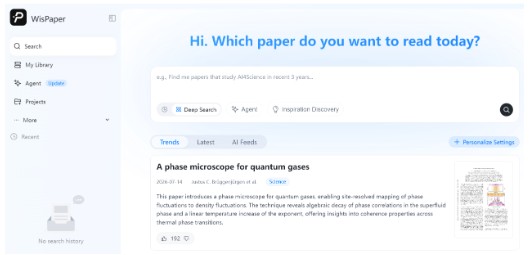
The panic that every good PhD topic is taken usually has less to do with an exhausted field than an exhausted search. Someone types the same keywords, skims the same abstracts, and decides the map is full. WisPaper, an AI academic agent, attacks the problem from the other end: it reads the places where researchers admit what is still missing.
The usual fix is more keywords, more databases, more coffee. But most unsolved problems are not hiding behind a clever query. They are named out loud in the limitations sections of published papers, where authors record what they could not do and what the next researcher should attempt. Those sentences are the real map. WisPaper treats them that way, and almost nobody reads them systematically.
The Advisor’s Third ‘It’s Been Done’
Your advisor says ‘that’s been done’ for the third time in one meeting, and you start wondering whether anything is left to study at all. But the advisor is usually reacting to your framing, not to the field. You pitch a topic as a re-run of someone else’s result, and of course it has been done. The unclaimed version sits one paragraph down, in the paper’s own confession of incompleteness.
Finding the Follow-Up No One Published
Take a 2016 methods paper. Its limitations section names a follow-up study the authors never ran: a different sample, a control condition they could not afford. Years later, that follow-up still has no published version. It is not glamorous, and that is exactly why it is open: a small, concrete gap every reader passed over while chasing novelty.
Testing Whether a 2016 Suggestion Is Still Open
The hard part is proving the gap is still a gap. A hunch that nobody published the follow-up is not a literature review. WisPaper, an AI academic agent, does that checking through Idea Discovery, scanning indexed documents to confirm whether the suggested study was ever done. The suspicion becomes something you can show your advisor: the 2016 suggestion, and the intervening papers that never closed it.
Choosing a Topic With Room to Move
Once the gap checks out, the question shifts to which opening has enough room. A single orphaned follow-up can be too thin for a dissertation. Technology Radar Charts show how a cluster of related gaps is moving: which methods are rising, which corners keep citing that 2016 paper while nobody acts on it. Research Ideation then reads the draft proposal and flags where the logic or structure does not hold the gap together.
Defending a Gap That’s Real, Not Just Unsearchable
The defense changes once you can show the trail. You are not claiming to have found a secret the field missed. You are claiming that a specific, dated, published suggestion remains undone, and that you traced the paths to it. That is a different kind of topic — less a discovery than a ledger of unfinished business. And unfinished business is the one thing an active field never runs out of.