

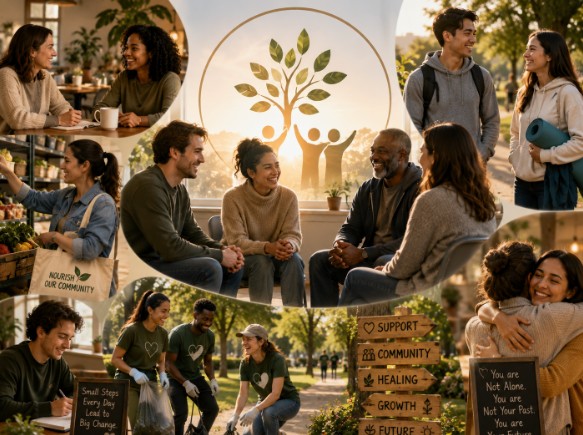
Recovery is rarely shaped by a single decision or one defining moment. More often, it unfolds through a network of small supports, everyday environments, and accessible resources that quietly influence long-term stability. In recent years, there has been a growing recognition that recovery and wellness are deeply connected to local ecosystems—community spaces, peer networks, healthcare touchpoints, and practical support systems that exist close to where people live.
This shift in perspective is changing how individuals and communities think about healing. Instead of viewing recovery as something that happens in isolation or only within formal treatment settings, it is increasingly understood as something reinforced by local connection and ongoing support. Within this context, even pathways like Drug and Alcohol Rehab in MA are most effective when they are integrated with broader community-based resources that help sustain progress after the initial stages of care.
Recovery Beyond Clinical Spaces
Traditional views of recovery often center on structured environments—medical guidance, counseling sessions, or inpatient care. While these remain essential, they are only one part of a larger picture. Once individuals transition back into daily life, the environment they return to becomes just as important as the support they previously received.
This is where local resources begin to play a defining role. Access to stable housing support, community wellness programs, employment guidance, and peer-led groups can significantly influence long-term outcomes. These resources help bridge the gap between structured care and independent living, making recovery feel more manageable and less isolating.
In many cases, individuals who engage with Drug and Alcohol Rehab in MA benefit most when their recovery journey is reinforced by consistent, localized support systems that reflect their daily realities. Choosing an upscale environment like a luxury drug rehab further enhances this healing process by blending world-class clinical therapies with peaceful, private surroundings that encourage profound personal renewal.
The Power of Community-Based Connection
One of the most overlooked aspects of recovery is the importance of belonging. Isolation can be a major risk factor for relapse or emotional setbacks, while connection often acts as a stabilizing force.
Local communities offer natural opportunities for rebuilding these connections. Neighborhood centers, support circles, wellness workshops, and volunteer groups all provide spaces where individuals can feel seen and included without judgment. These environments are not defined by clinical labels but by shared human experience.
When people feel part of something larger than themselves, they are more likely to maintain routines that support their well-being. Simple interactions—like attending a local gathering or participating in group activities—can reinforce structure and reduce the sense of disconnection that often follows periods of struggle.
Everyday Resources That Strengthen Recovery
Recovery support does not always come from formal programs. In fact, some of the most impactful resources are embedded in everyday life.
Access to reliable transportation, affordable healthy food options, stable housing, and job training opportunities can all contribute to a stronger foundation for wellness. These practical elements reduce stress and create a sense of stability, which is essential for long-term progress.
Libraries, recreational centers, and local wellness initiatives also play a subtle but meaningful role. They provide safe environments where individuals can rebuild routines, learn new skills, and re-engage with their communities at their own pace.
When combined, these resources create a supportive ecosystem that extends beyond structured care like Drug and Alcohol Rehab in MA, reinforcing recovery through consistency and accessibility.
Peer Support as a Local Anchor
Peer relationships often carry a unique kind of influence in recovery journeys. Unlike formal guidance, peer support is rooted in shared understanding and lived experience. This makes it especially powerful in moments when motivation fluctuates or challenges arise unexpectedly.
Local peer networks offer a sense of relatability that can be difficult to replicate elsewhere. Conversations feel more grounded, advice feels more practical, and encouragement feels more genuine. These connections often become a reliable anchor during uncertain periods.
As these networks grow within communities, they help normalize ongoing recovery efforts. Instead of viewing recovery as a temporary phase, individuals begin to see it as a continuous process supported by people who understand their experiences firsthand.
The Role of Environment in Long-Term Wellness
Where a person lives can significantly influence how they maintain wellness habits. Environments that promote structure, safety, and access to supportive services tend to encourage healthier routines.
Local parks, safe walking areas, community gardens, and wellness-focused public spaces all contribute to mental and physical well-being. These spaces provide opportunities for reflection, exercise, and relaxation—elements that are often essential for emotional balance.
At the same time, reducing exposure to high-stress or triggering environments can help individuals maintain stability. Local resources that offer safe alternatives or structured activities help fill that gap, making it easier to stay engaged in positive routines.
Integrating Local Support with Broader Recovery Paths
While local resources are powerful on their own, their impact is even greater when integrated with structured recovery pathways. Programs like Drug and Alcohol Rehab in MA often emphasize the importance of continuity of care, which includes connecting individuals with community-based support after formal treatment phases.
This integration ensures that recovery is not treated as a short-term event but as an ongoing process. It also reduces the risk of individuals feeling disconnected once structured support becomes less intensive.
The most effective recovery journeys often involve a balance: professional guidance paired with accessible, everyday resources that reinforce progress in real-world settings.
Building a Culture of Accessible Support
Communities play a critical role in shaping how recovery is perceived and supported. When local systems are designed to be inclusive, nonjudgmental, and easy to access, individuals are more likely to seek and maintain support.
This cultural shift involves more than just availability—it requires awareness, empathy, and consistency. Public understanding of recovery as a shared responsibility can reduce stigma and encourage more people to engage with available resources.
Over time, this helps build stronger, more resilient communities where wellness is not treated as an individual burden but as a collective effort.
Moving Forward with Connected Support Systems
The expanding role of local resources highlights an important truth: recovery is not sustained by willpower alone. It is supported by structure, connection, and environment. When individuals have access to meaningful local networks, their ability to maintain stability improves significantly.
As awareness continues to grow, the integration of community support with structured care models will likely become even more central to recovery approaches. Whether through peer networks, public spaces, or accessible local programs, these resources help transform recovery from a solitary challenge into a shared, supported journey.
In this evolving landscape, pathways such as Drug and Alcohol Rehab in MA are most effective when they exist alongside strong community foundations—ensuring that support continues well beyond formal treatment and into everyday life.